The Skopje to Belgrade drive takes you through some of the most historically significant territory in the Balkans. From the Roman birthplace of Constantine the Great to the socialist capital of Yugoslavia, the route passes monuments, fortresses, and museums that reward a stop. This guide covers the key museums along the E75 route and in Belgrade itself.
Along the E75: Museums Between the Border and Niš
Skull Tower (Ćele Kula), Niš
The most confronting historical monument in the Balkans. In 1809, the Ottoman commander Hurshid Pasha ordered the skulls of Serbian rebels killed at the Battle of Čegar to be embedded into a tower as a warning to the population. Around 952 skulls were originally mounted in the masonry. Today 58 remain, enclosed in a purpose-built chapel. The tower stands intact and the skulls are visible at close range.
The French poet Alphonse de Lamartine visited in 1833 and wrote: "I wished that each of my countrymen could have a view of this monument... they would learn at what price we have bought the liberty that we enjoy in our country."
Location: 1 km east of Niš city centre, off the road to Sofia.
Hours: Tuesday–Sunday 09:00–17:00 (winter), 09:00–19:00 (summer).
Entry: ~300 RSD (€2.50).
Time needed: 20–30 minutes.
Niš Fortress (Niška Tvrđava)
A well-preserved Ottoman fortress completed in the 18th century on the site of earlier Roman and Byzantine structures. The fortified walls are almost entirely intact. Inside: a functioning craft market, an open-air theatre, a small archaeology museum with Roman finds, and the ruins of a Turkish bath. The Bali Beg Mosque, converted to a Byzantine church after 1878, stands inside the walls.
Location: City centre, adjacent to the Nišava River.
Hours: Always open (fortress grounds). Museum: Tuesday–Sunday 10:00–18:00.
Entry: Fortress free. Museum: ~200 RSD (€1.70).
Time needed: 45 minutes to 1.5 hours.
National Museum Niš
A regional museum covering prehistory through the Roman, Byzantine, and Ottoman periods. The Roman section is strong — Naissus (present-day Niš) was the birthplace of Constantine the Great and an important production centre for the late Roman Empire. The museum holds coins, mosaics, bronzes, and funerary sculptures from the Roman period.
Hours: Tuesday–Friday 10:00–18:00, Saturday–Sunday 10:00–14:00.
Entry: ~200 RSD (€1.70).
Belgrade: Major Museums
National Museum of Serbia
Located on Republic Square in the centre of Belgrade, the National Museum holds one of the largest collections in the Balkans: over 400,000 artifacts spanning prehistory to the 20th century. The archaeological floor contains extraordinary finds from prehistoric Serbian cultures (Vinča culture, 6th–3rd millennium BC — one of Europe's first urban civilisations). The medieval section covers Serbian empire art and Byzantine-influenced religious objects. The modern art floor has Impressionist and Post-Impressionist European paintings acquired in the 19th century.
The museum was closed for 15 years of renovation and reopened in 2018. It is now one of the best-presented national museums in the region.
Location: Trg Republike 1a, Republic Square.
Hours: Tuesday, Wednesday, Friday 10:00–17:00. Thursday 12:00–20:00. Saturday 10:00–17:00. Sunday 10:00–14:00.
Entry: 1,000 RSD (~€8.50).
Time needed: 2–3 hours.
Museum of Yugoslavia (House of Flowers)
The combined site of the Museum of Yugoslavia and the Mausoleum of Marshal Josip Broz Tito (the House of Flowers, Kuća Cveća) is one of the most fascinating history museums in the former Yugoslavia. The museum covers the political history of communist Yugoslavia from 1945 to 1991. The House of Flowers contains Tito's white marble tomb, surrounded by the flowers he requested be maintained after his death. The building is atmospheric and genuinely interesting for anyone who wants to understand Cold War Europe from a non-Western perspective.
Location: Botićeva 6, Dedinje (south Belgrade, taxi or metro recommended).
Hours: Tuesday–Sunday 10:00–18:00.
Entry: 800 RSD (~€7).
Time needed: 1.5–2 hours.
Belgrade Fortress (Kalemegdan)
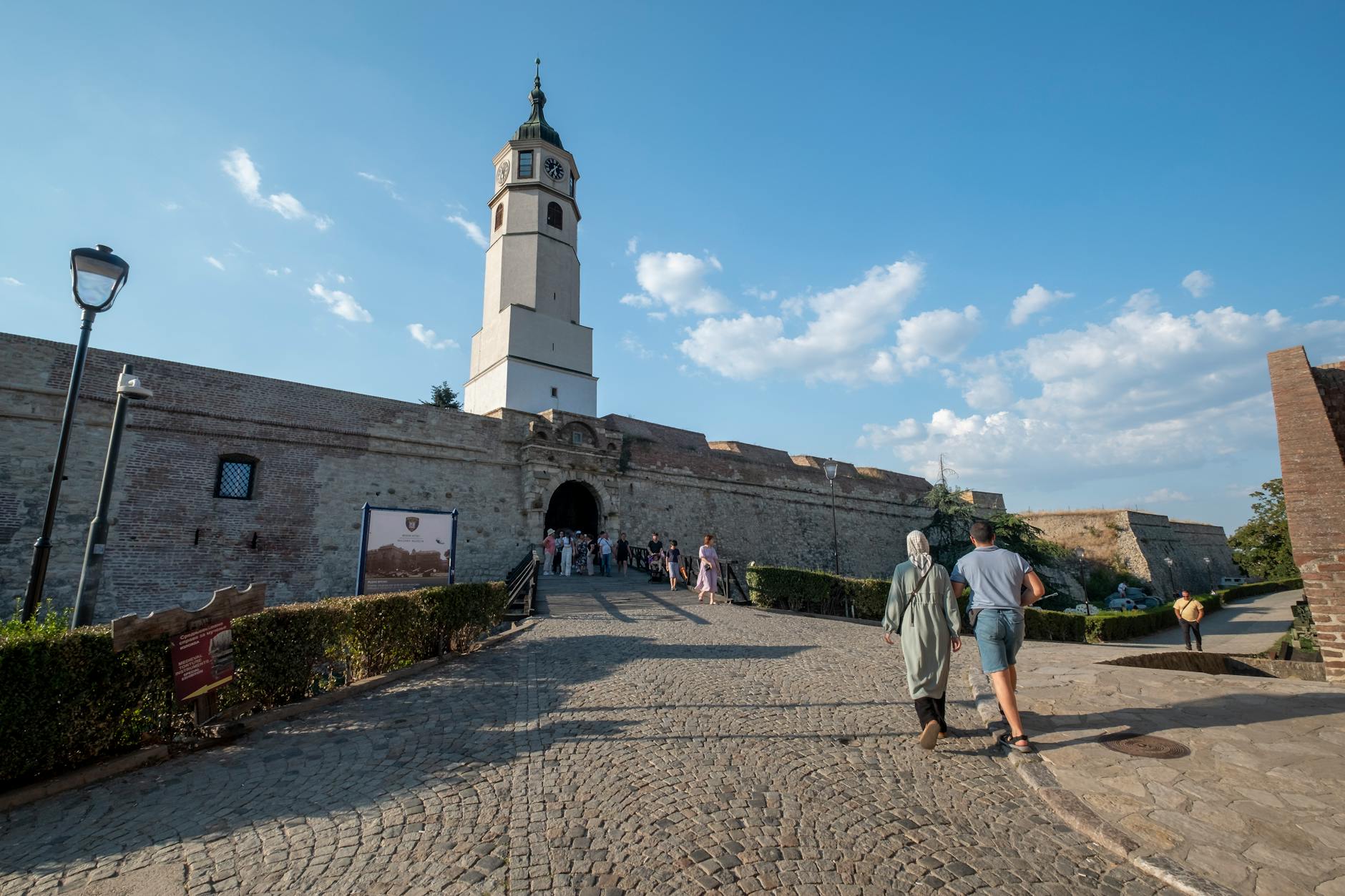
Not technically a museum but an open-air complex covering 1,500 years of history — Roman, Byzantine, medieval Serbian, Ottoman, and Austro-Hungarian fortifications layered on a bluff overlooking the confluence of the Sava and Danube rivers. Inside the complex: the Military Museum (with outdoor artillery displays), the Cvijeta Zuzorić Art Pavilion, several Orthodox churches, Roman wells and dungeons, and the Istanbul Gate.
The views from the ramparts over the two rivers are among the best in Belgrade.
Location: Kalemegdan Park, city centre.
Hours: Always open (park). Military Museum: Tuesday–Sunday 10:00–17:00.
Entry: Park free. Military Museum: 500 RSD (~€4.30).
Time needed: 1–2 hours.
Tesla Museum (Nikola Tesla Museum)
A dedicated museum to the inventor Nikola Tesla, housed in his former residence. The collection includes Tesla's original documents, letters, photographs, and personal effects, as well as working demonstrations of his electrical experiments (the 45-minute guided demonstration involves a live Tesla coil). Tesla was born in what is now Croatia but did much of his work and legacy-building during the period when Serbia was the dominant force in the region; the museum explains this context well.
Location: Krunska 51, central Belgrade.
Hours: Tuesday–Friday 10:00–17:00. Saturday–Sunday 10:00–14:00.
Entry: 700 RSD (~€6). Demonstrations run several times daily.
Time needed: 1–1.5 hours.
Practical Notes
- Museum card: Belgrade does not currently have a single tourist museum pass.
- Language: Most major Belgrade museums have English labelling and often English audio guides.
- Getting around: Belgrade's city centre is compact and walkable. The fortress, National Museum, and Republic Square are all within 15 minutes on foot. The Tesla Museum and Museum of Yugoslavia require a short taxi or tram ride.
- Photography: Permitted in most museums without flash. Check on entry.
For the full route from Skopje to Belgrade including tolls and border crossing, see our Skopje to Belgrade driving guide. To rent a car at Skopje Airport, book online here.
Quick reference
| Item | Detail |
|---|---|
| Company | Relax Rent a Car Skopje Airport (since 2001) |
| Pickup location | Skopje Alexander the Great Airport (SKP / LWSK) |
| Hours | 24/7, all flights |
| Payment | Cash (EUR/MKD), Visa, Mastercard |
| Deposit | None (zero credit-card hold on mini/economy/auto/diesel) |
| Insurance included | Basic CDW with €200 excess; Premium €15/day zero excess |
| VAT | 18% included in all prices |
| Phone / WhatsApp | +389 71 390 627 |
Frequently Asked Questions
What is the most famous museum in Serbia? The National Museum of Serbia in Belgrade is the country's largest and most visited — it holds over 400,000 artefacts including the Miroslav Gospel (a 12th-century illuminated manuscript) and important finds from Roman and medieval Serbian sites. However, for sheer impact, many visitors find the Skull Tower in Niš more memorable.
Is the Tesla Museum worth visiting in Belgrade? Yes — the Nikola Tesla Museum is one of the best science museums in the region. It combines genuine archival material (Tesla's ashes are held here) with working demonstrations of Tesla coils and rotating magnetic fields. It is popular with families and science-minded adults. Arrive early or book online in summer — visitor numbers are capped.
Do Serbian museums have English-language labels? The major national museums in Belgrade (National Museum, Tesla Museum, Museum of Yugoslavia) all have English labelling and often English audio guides. Smaller regional museums outside Belgrade may have limited English. The Skull Tower chapel in Niš has multilingual explanatory panels.
How do I get from Niš to Belgrade after visiting museums? The E75 motorway connects Niš and Belgrade in approximately 2.5 hours by car. The drive is straightforward — dual carriageway the entire way. If you arrive at Niš by car from Skopje, continuing to Belgrade and then returning via a different route (for example, through North Macedonia via the E80) makes a practical loop.
What is admission like for Serbian museums? Entry fees for major Serbian museums are very reasonable. Expect 300–500 RSD (€2.50–4) for most national collections. The Museum of Yugoslavia charges around 800 RSD (€7). Many museums offer free entry on specific days — the National Museum is free on Tuesday evenings.