The drive from Skopje to Belgrade is 440 kilometres along the E75 motorway — about four and a half hours in normal traffic. That is long enough to get hungry twice and stop at least once properly. Serbia has one of the most distinctive food cultures in the Balkans, heavily influenced by Ottoman, Austro-Hungarian, and Byzantine traditions. Here is what to eat on the way.
The Road from Skopje to Belgrade
You cross into Serbia at the Tabanovce–Preševo border, then join the E75 north through Niš before swinging northwest toward Belgrade. The section between Niš and Belgrade is the most interesting for food stops — this stretch passes through some of Serbia's best agricultural land and several towns known for specific dishes.
For the full driving guide including tolls and fuel, see our Skopje to Belgrade road trip guide.
Serbian Food: The Essentials
Ćevapi (Ćevapčići)
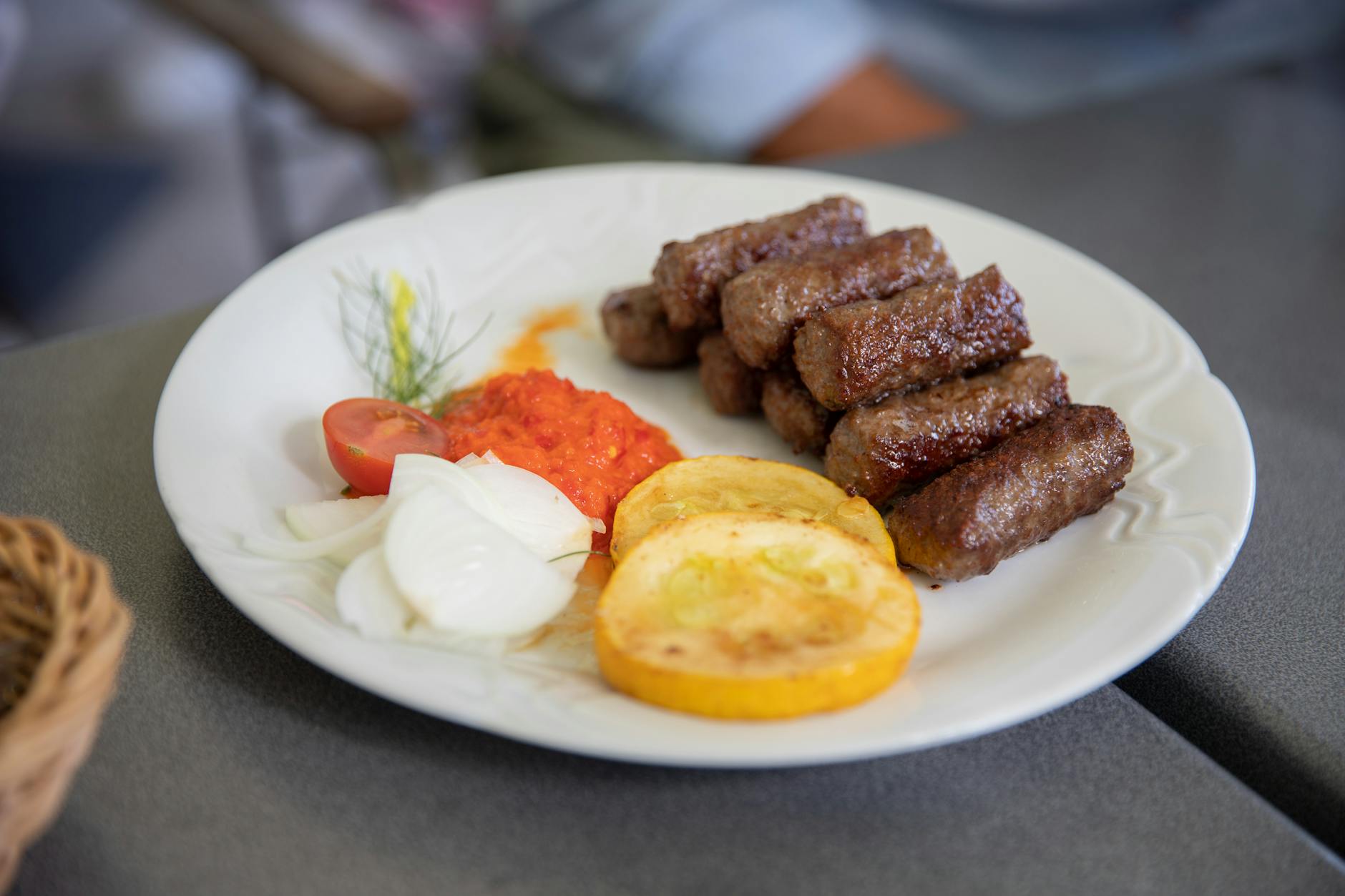
The most recognisable Serbian dish. Small, skinless minced meat sausages — pork and beef mixed — grilled over charcoal and served with flatbread (lepinja), raw onion, kajmak (a thick creamy dairy spread similar to clotted cream), and ajvar (roasted red pepper relish).
Serbian ćevapi differ from the Macedonian and Bosnian versions in the ratio of meats and the slightly coarser texture. The best are eaten at a small kafana (traditional tavern), not a roadside fast food place.
Where to try them on the drive: Any sit-down restaurant in Niš. The city has dozens of kafanas serving ćevapi.
Pljeskavica
Serbia's answer to the burger, and it predates the American version here by centuries. A large grilled patty of mixed minced meat — pork, beef, and sometimes lamb — spiced with onion, paprika, and occasionally hot pepper. It is served in lepinja bread with the same accompaniments as ćevapi.
The Leskovac variant (Leskovačka pljeskavica) is the most famous, made with more spices and a juicier mixture. Leskovac sits directly on the E75 between the Macedonian border and Niš — it is the obvious lunch stop on the northbound drive.
Where: The town centre of Leskovac, roughly 60 km north of the Preševo border crossing.
Kajmak
Not a dish by itself but essential context. Kajmak is a thick, lightly salted dairy spread made from the cream skimmed off boiled milk over several days. It is fattier and richer than sour cream, with a mild tang. Served cold alongside grilled meats, spread on bread, or melted over hot ćevapi. You cannot eat properly in Serbia without encountering it.
Burek sa Mesom
The Serbian version of burek is made with meat (sa mesom = with meat), whereas the Macedonian and Greek versions often use cheese or spinach. Serbian burek is sold by the kilogram at bakeries (pekara) and eaten as a quick breakfast or snack. At the motorway rest stops, it is usually acceptable. From a proper pekara in a town, it is excellent.
Srpska Salata
A simple salad of tomato, cucumber, onion, and feta-style white cheese, dressed with sunflower oil and a splash of vinegar. Served with virtually every grilled meal. Do not skip it — the tomatoes in Serbia during summer are genuinely exceptional.
Stops on the Drive North
Vranje (30 km north of the border)
The first proper town after crossing. If you left Skopje early and need a breakfast stop, the pekare (bakeries) here open early. Look for fresh burek or gibanica (layered cheese pastry) with yogurt.
Leskovac (60 km from the border)
The unofficial capital of Serbian grilled meat. Leskovac has its own food festival in September (Leskovačka Roštiljijada), one of the largest grilled meat festivals in Europe. The Leskovačka pljeskavica here is made to a specific recipe protected by local tradition.
Recommended stop: Sit-down restaurant in the Leskovac town centre, not the motorway service station. The detour adds 10 minutes.
Niš (100 km from the border)
The largest city between Skopje and Belgrade, with the best restaurant options on the route. The Niš kafana scene around Tinkers' Alley (Kazandžijsko sokače) is worth a 45-minute stop for lunch.
What to order: Ćevapi, pljeskavica, a plate of kajmak, srpska salata, and a glass of local beer (Niška pivara brewery is based here).
Motorway Service Stations
Serbian motorway rest areas (odmorišta) are reasonably well maintained and sell burek, sandwiches, and hot food. They are fine for fuel and coffee. For a proper meal, take an exit.
Serbian Drinks
Rakija
The national spirit of Serbia. Rakija is a fruit brandy — šljivovica (plum) is the most traditional, but you will also find kruška (pear), kajsija (apricot), loza (grape), and dunja (quince). It is served at the start of a meal as an aperitif, at the end as a digestif, and sometimes continuously throughout.
Do not drink rakija if you are driving. The alcohol content ranges from 40% to 60%+. Homemade (domaća) rakija, offered hospitably by locals, is often stronger than commercial versions.
For the driver: mineral water (mineralna voda) or jogurt (drinking yogurt, thick and tangy) are the correct non-alcoholic accompaniments to a Serbian meal.
Serbian Beer
Jelen, Lav, and Zaječarsko are the three main commercial lagers. Niška pivara (from Niš) produces a well-regarded Niško pivo. All are light, cold, and appropriate for summer driving weather in the Balkans. Again — after you have stopped for the night.
Domać Sok (Homemade Juice)
Many Serbian restaurants produce their own syrup-based juices: višnja (sour cherry), malina (raspberry), and šipak (rosehip) are common. They are sweet, usually diluted with cold water, and genuinely good. Order domaći sok with your meal.
Food to Bring Back from Serbia
If you are driving the return route from Belgrade to Skopje, these are worth buying:
- Ajvar (jarred roasted pepper relish) — Serbian ajvar, particularly from southern Serbia, is some of the best in the region. Buy it at a supermarket or market, not a tourist shop.
- Suho meso (dried meat) — similar to bresaola or prosciutto. Found at markets and butchers.
- Domaća rakija — if someone gives you a bottle, it is a genuine gift. Declare it at the border if it exceeds the duty-free allowance.
Practical Notes
- Currency: Serbian dinar (RSD). Cards accepted at most restaurants in Niš and Belgrade; cash useful for smaller stops.
- Language: Serbian uses both Cyrillic and Latin script. Menus in tourist areas often have Latin transliterations or pictures.
- Tipping: 10% is standard and appreciated.
- VAT: Included in menu prices. No separate service charge.
For the full route — tolls, border crossing tips, and fuel stations — see our complete Skopje to Belgrade driving guide. To rent a car at Skopje Airport for this trip, visit our booking page.
Route reference
| Segment | Distance | Time | Notes |
|---|---|---|---|
| Skopje to Ohrid | 173 km | 2h 30 min | A2 motorway, fuel at Veles |
| Ohrid to Bitola | 79 km | 1h 30 min | Mountain pass, slow in winter |
| Skopje to Mavrovo | 79 km | 1h 30 min | Mountain road, snow chains Dec-Feb |
| Skopje to Pristina | 92 km | 1h 30 min | Green Card Zone 1 required |
| Skopje to Tirana | 295 km | 4h 30 min | Albania, Green Card Zone 2 |
| Skopje to Sofia | 245 km | 3h 30 min | Bulgaria, A4 motorway |
Frequently Asked Questions
What is the most popular traditional food in Serbia? Ćevapi (also written ćevapčići) is the most widely eaten dish — small grilled minced-meat sausages served with lepinja flatbread, kajmak cream, and ajvar pepper relish. You will find it at every kafana from the border to Belgrade.
Is Serbian food different from Macedonian food? The dishes overlap significantly — both cuisines share ćevapi, ajvar, and grilled meats — but Serbia has stronger influences from Austria-Hungary in the north (dishes like goulash and gibanica pastry) and the Ottoman south. Serbian ćevapi use a higher pork ratio and coarser texture than the Macedonian version.
Where is the best place to eat on the Skopje to Belgrade drive? Niš is the best stop. The city sits roughly halfway along the E75 and has a strong kafana culture. The old Tvrđava fortress area has several good restaurants. If you are short on time, the service areas between Niš and Belgrade have adequate burek and grilled meat options.
Can I pay with a card at Serbian restaurants? Major restaurants in Niš and Belgrade accept Visa and Mastercard. Smaller kafanas and roadside stands are often cash-only. It is worth keeping a small amount of Serbian dinar (RSD) for food stops outside the main cities.
How long is the drive from Skopje to Belgrade? The total distance is approximately 440 km on the E75 motorway. Without stops, the drive takes around 4.5 hours. Budget 6–7 hours if you plan a proper meal stop in Niš and time to cross the Tabanovce–Preševo border.