
The drive from Skopje to Sofia is 240 kilometres along the E871 motorway, crossing the Bulgarian border at Deve Bair. It takes about two and a half hours without stops — one of the shorter cross-border drives from North Macedonia. Bulgaria sits in a similar Balkan-Ottoman culinary tradition as North Macedonia, but with its own distinct dishes and a wine culture that surprises most visitors.
For the full route with toll information and border crossing tips, see our Skopje to Sofia driving guide.
What Makes Bulgarian Food Distinct
Bulgarian cuisine shares many dishes with its neighbours — grilled meats, white cheese, yogurt, stuffed peppers — but it has several things that are genuinely its own. Bulgarian yogurt (kiselo mlyako) is one of the most famous dairy products in the world; the bacteria strain Lactobacillus bulgaricus is named after the country. Bulgarian wine, largely unknown in Western Europe, is made from indigenous grape varieties in conditions that produce full-bodied, affordable reds.
Core Dishes
Banitsa
The most recognisable Bulgarian breakfast. Banitsa is a baked pastry of filo layers filled with a mixture of eggs and white cheese (sirene). It comes from the bakery (furna) warm, slightly oily, with a crispy exterior and a soft, slightly salty interior. It is eaten with yogurt on the side or a glass of cold ayran (diluted, salted yogurt drink).
Every Bulgarian town has a bakery selling banitsa from early morning. At motorway service stations the quality varies; in a proper town centre bakery, it is reliable and cheap — under €1.50 for a large portion. Spinach banitsa (spanatsa) and pumpkin banitsa (tikvenik) are common variants.
Shopska Salata
The national salad and one of the most recognisable dishes in the Balkans. Shopska is a simple combination of diced tomato, cucumber, roasted pepper (sometimes raw), and onion, covered with a thick layer of grated white cheese (sirene). Dressed with sunflower oil and a little vinegar.
Unlike most Balkan salads, the shopska uses grated rather than cubed cheese — the white snow on top of the vegetables is distinctive. The key is the quality of the tomatoes and the sharpness of the sirene. A properly made shopska is one of the finest vegetable dishes in the region.
Kavarma
A slow-braised pork or chicken dish cooked in a clay pot with onions, peppers, tomatoes, mushrooms, and a small amount of white wine. The pot is covered and cooked until the meat is completely tender and the sauce has reduced to a thick, dark gravy. Kavarma is the Bulgarian equivalent of a casserole — deeply savoury and winter-appropriate. Served with white bread for soaking.
Tarator
A cold soup unique to Bulgaria (and occasionally North Macedonia), made from yogurt, cucumber, garlic, walnuts, dill, and water. Served chilled in the summer months. It is refreshing and very good on a hot day after several hours of driving. Order it as a starter.
Meshana Skara (Mixed Grill)
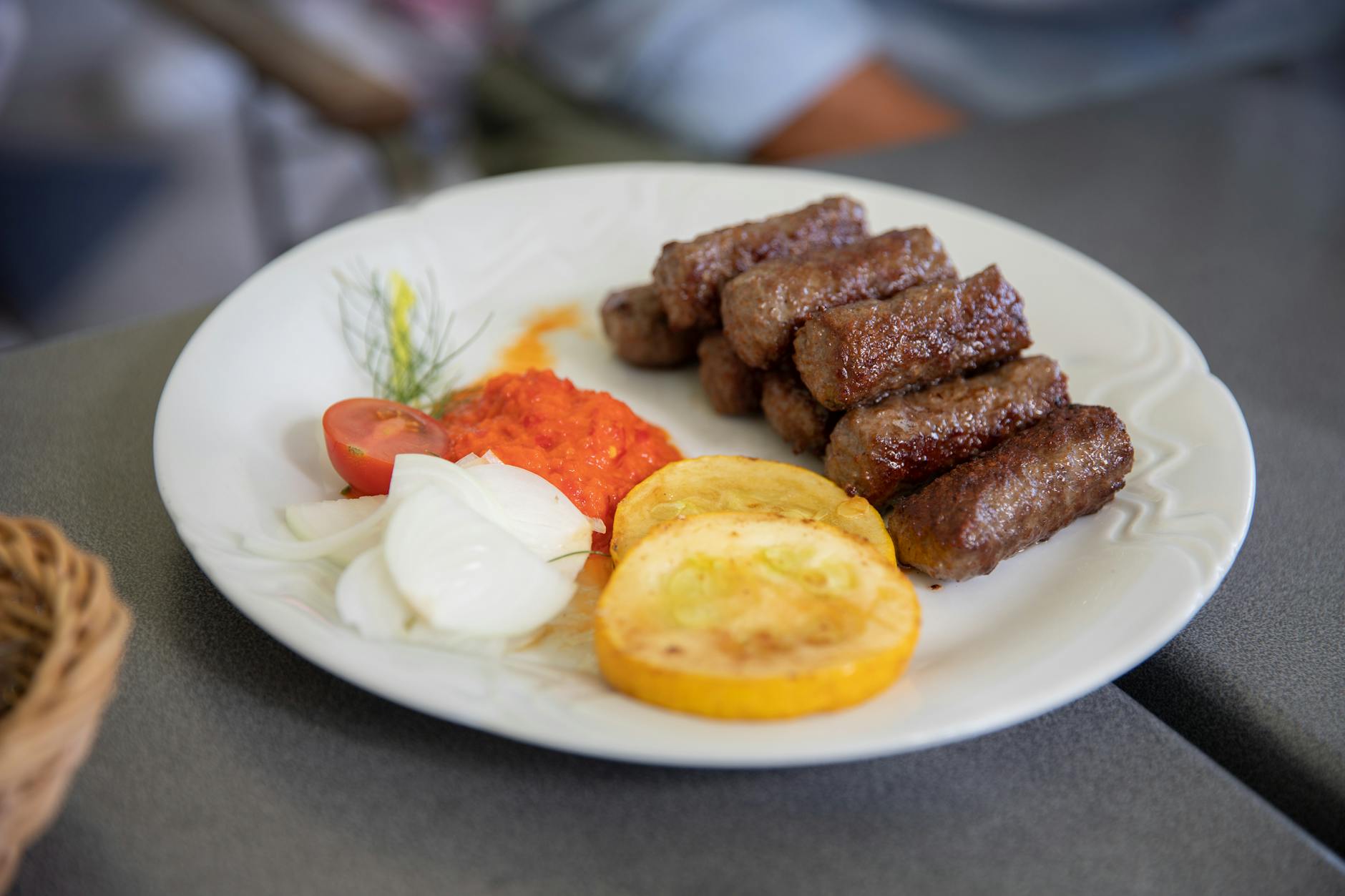
Bulgarian roadside restaurants along major routes almost always have a grill section. A mixed grill plate (meshana skara) typically contains: kyufte (a flat spiced pork patty, Bulgaria's answer to pljeskavica), kebapche (thin pork sausage similar to ćevapi), a skewer of pork or chicken, and often a pork chop. Served with chips, bread, and shopska salata.
The quality of Bulgarian grilled meat depends almost entirely on the establishment. At a proper sit-down mehana (traditional Bulgarian restaurant), the meat is seasoned correctly and grilled over wood coals. At a plastic-chair motorway stop, it is less reliable.
Shkembe Chorba
Tripe soup, served as a hangover cure and a warming winter breakfast. Thick, fatty, slightly sour from yogurt, with paprika oil drizzled on top and raw garlic on the side. Not for the faint-hearted, but extremely popular in Bulgaria. Found at dedicated breakfast restaurants (shkembedzhinitsi) open from very early in the morning.
Bulgarian Dairy
Bulgarian sirene (white brined cheese) is sharper and more acidic than Greek feta. Bulgarian yogurt (kiselo mlyako) is thicker and tangier than most Western equivalents. Kashkaval is a yellow, slightly elastic hard cheese with a mild, milky flavour — good for snacking.
At supermarkets, buying a small container of Bulgarian yogurt and a piece of kashkaval is one of the best roadside snacks in the Balkans.
Bulgarian Wine
Bulgaria is a significant wine producer and largely unknown in export markets, which means excellent quality at very low prices. The main wine regions on or near the Sofia route:
Thracian Valley (Plovdiv region): Bulgaria's largest wine region, south of Sofia. The primary red grape is Mavrud — a full-bodied, deeply coloured native variety with a herbal, slightly tannic character. This is Bulgaria's signature grape.
Melnik: Near the Greek and Macedonian borders, a town famous for the Shiroka Melnishka Loza grape — a big, dark, almost syrupy red with high alcohol. Melnik wines are among the most age-worthy in the Balkans.
Sandanski: On the route from North Macedonia to Sofia, Sandanski is a spa town surrounded by vineyards. Stop at a winery or buy local wine at a market.
At Sofia supermarkets (Kaufland, Billa), a good Bulgarian bottle costs €4–8 and is dramatically better value than comparable Western European wine.
Bulgarian Drinks (Non-Alcoholic)
Ayran: Chilled, diluted yogurt drink with a pinch of salt. Common with banitsa and grilled meat. The Bulgarian commercial brand Danone version is widely available; local dairy brands are better.
Boza: Same as Albanian boza — a mildly fermented wheat drink, sweet and thick. Found at specialist shops in Sofia.
Mineral water: Bulgaria has excellent mineral water brands, particularly Devin and Bankya. Inexpensive and widely available.
Where to Eat on the Route
Kyustendil (40 km inside Bulgaria): The first proper town after the Deve Bair crossing. Town centre has mehanas with good shopska and kavarma. Worth a 30-minute stop.
Pernik: Industrial city, not a tourist destination, but authentic Bulgarian working-class food at low prices.
Sofia: The Zhenski Pazar (Women's Market) in the city centre is the best place to buy fresh produce, local cheese, honey, and wine to take home. For traditional mehana food, the streets around Vitosha Boulevard and the central Slaveykov Square area have good options.
Practical Notes
- Currency: Bulgarian lev (BGN). Bulgaria is in the EU but not the eurozone. €1 ≈ 1.96 BGN. Cards widely accepted.
- VAT: 20%. Included in all prices.
- Tipping: 10% is standard. Service charges are rarely added automatically.
- Fuel: Bulgaria has lower fuel prices than North Macedonia. Fill the tank on the Bulgarian side.
To rent a car at Skopje Airport for this road trip, book online here.
Quick reference
| Item | Detail |
|---|---|
| Company | Relax Rent a Car Skopje Airport (since 2001) |
| Pickup location | Skopje Alexander the Great Airport (SKP / LWSK) |
| Hours | 24/7, all flights |
| Payment | Cash (EUR/MKD), Visa, Mastercard |
| Deposit | €100 refundable at pickup (cash or card, no card hold) |
| Insurance | Third-party liability included; CDW €7/day optional (€200 excess); Full cover €15/day zero excess |
| VAT | 18% included in all prices |
| Phone / WhatsApp | +389 71 390 627 |
Frequently Asked Questions
What is Bulgarian food like? Bulgarian cuisine is hearty and dairy-forward. It shares the Balkan love of grilled meats and salads but stands apart through its exceptional dairy products — Bulgaria produces some of the world's best yoghurt, and the country's white sirene cheese is a daily staple. Shopska salata (tomatoes, cucumbers, peppers, and grated sirene) is the unofficial national dish, eaten year-round.
How far is Sofia from Skopje? Sofia is approximately 175 km from Skopje via the E871 motorway, about 2.5 hours by car. The border crossing is at Deve Bair/Gyueshevo. Sofia is one of the easiest day trips from Skopje and a straightforward overnight destination.
What is banitsa and where can I get it in Sofia? Banitsa is a baked pastry made with layers of filo dough and a filling of whisked eggs and sirene cheese. It is Bulgaria's most popular breakfast food. Every bakery (furna or furnadzhiynitsa) sells it fresh in the morning, and there are dedicated banitsa chains across Sofia. The best are eaten hot, straight from the oven.
Is Bulgaria in the Eurozone? No — Bulgaria uses the Bulgarian lev (BGN). As of 2025, 1 EUR = approximately 1.96 BGN. The exchange rate is fixed due to Bulgaria's currency board arrangement. You can pay with euros at some tourist establishments, but local prices are in lev. Card payment is widely accepted.
What Bulgarian wine should I try? Bulgaria has a long wine tradition with several indigenous grape varieties. Mavrud is a rich, tannic red from the Plovdiv region. Rubin is a lighter Bulgarian red grape cross. Melnik 55 from the Melnik region (southwest Bulgaria near the Greek border) is produced in tiny quantities and considered the finest Bulgarian red. White wine from the Evksinograd winery near Varna is the historic favourite.