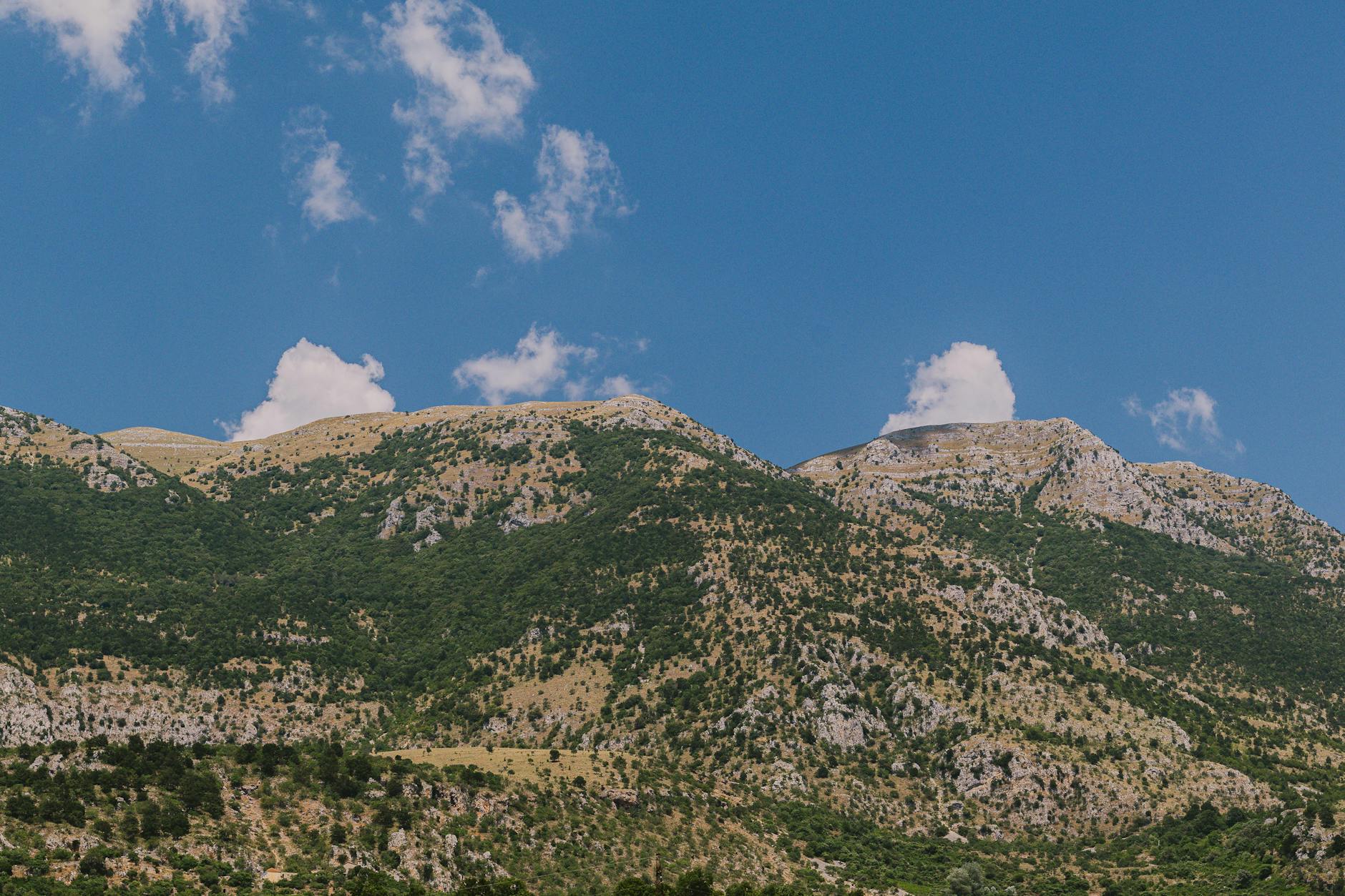
Montenegro is a small country with a concentrated and varied cultural heritage. The Bay of Kotor — a drowned river canyon often called Europe's southernmost fjord — was an important Venetian maritime centre for four centuries. The interior plateau around Cetinje was the capital of the independent Principality of Montenegro, with its own distinct warrior culture and royal history. The museums here reflect both traditions: maritime, artistic, ecclesiastical, and political.
Kotor: The Walled City
Maritime Museum of Montenegro (Pomorski Muzej)
The most important museum in Kotor, housed in the Grgurina Palace — an 18th-century Venetian baroque building within the Old Town walls. Kotor was a Venetian possession for nearly four centuries (1420–1797), and its maritime tradition reflects this: the city produced admirals, merchants, and navigators who served the Venetian and later Austro-Hungarian navies.
The collection spans three floors: maps, ship models, navigational instruments, portraits of Kotor sea captains, uniforms, weapons, and documents. The ship models are the highlight — precise 18th and 19th century models of Mediterranean sailing vessels at various scales. The portrait gallery of Kotor captains, in their Venetian uniforms, is an unusual document of a small city's sustained maritime culture.
Location: Trg bokeljske mornarice, inside the Old Town.
Hours: Monday–Saturday 09:00–18:00, Sunday 09:00–13:00 (summer). Shorter hours in winter.
Entry: €4.
Time needed: 1 hour.
Cathedral of Saint Tryphon
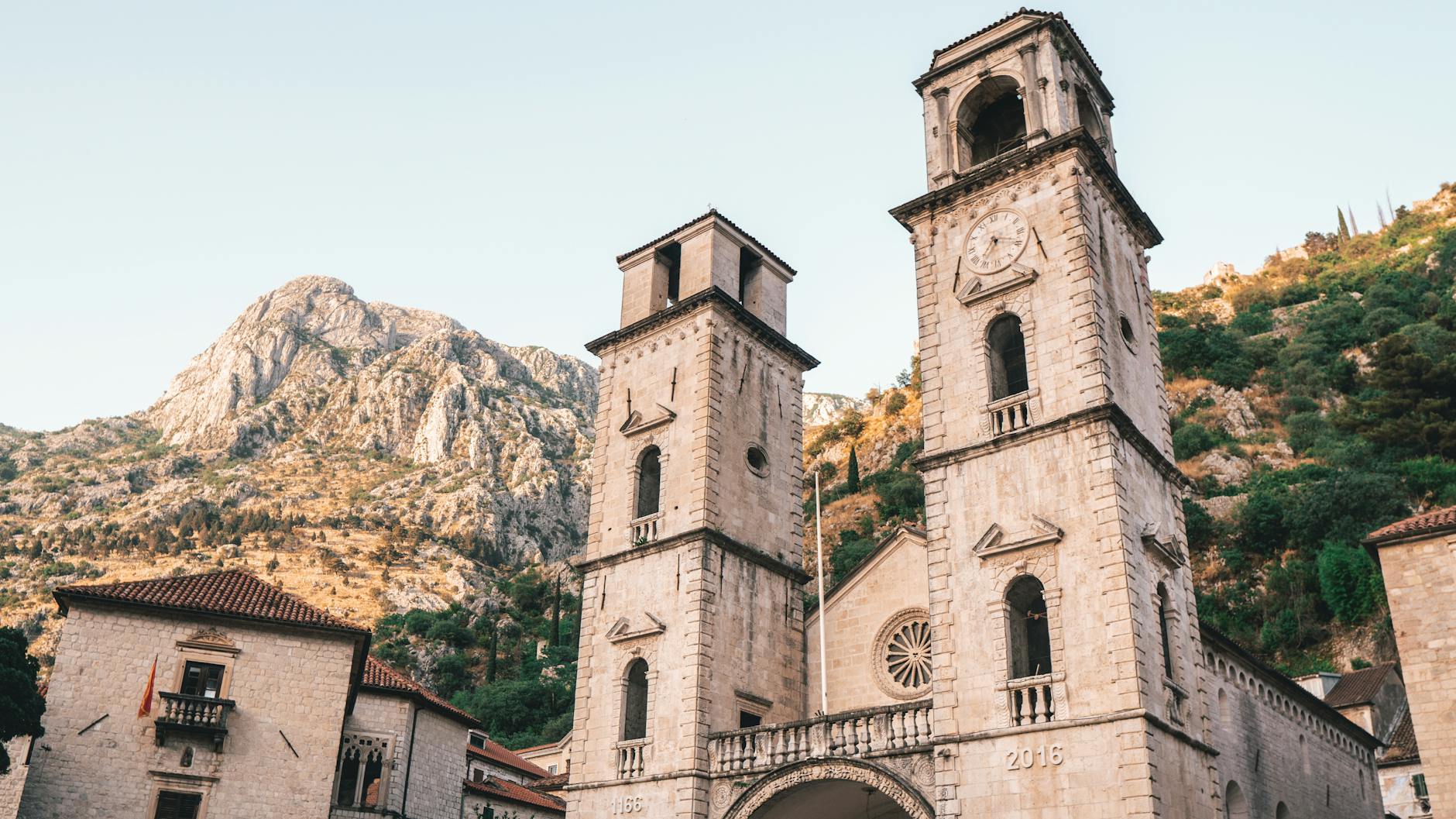
The most important medieval building in Montenegro. A Romanesque cathedral begun in the 12th century and rebuilt after earthquake damage in 1667. The façade has two asymmetric towers — the left tower was never completed to match the right due to the earthquake damage, which is now part of its character.
Inside: a Romanesque ciborium over the altar, 14th-century Gothic reliefs, and a cathedral treasury (riznica) containing some of the most important Romanesque and Gothic goldwork in the eastern Adriatic. The treasury holds: a 14th-century relief bust of Saint Tryphon (the patron saint) in gold and silver, Byzantine reliquaries, illuminated manuscripts, and ecclesiastical textiles from the Venetian period.
Location: Cathedral Square, inside the Old Town.
Hours: Daily 09:00–19:00 (summer), shorter in winter.
Entry: Cathedral free. Treasury: €3.
Time needed: 45 minutes.
Kotor Old Town Walls
The medieval fortification walls climb from sea level to the hilltop Fort St. John above the city — 1,350 steps and approximately 4.5 km of wall. The ascent takes 45–90 minutes depending on fitness and frequency of stops. The views over the Bay of Kotor at the top are extraordinary. Historically the walls were the primary defense of the city through Venetian and Austro-Hungarian periods.
Entry: €8 per person. Access from inside the Old Town.
Time needed: 1.5–2 hours for the ascent and return.
Cetinje: The Royal Capital
Cetinje, 35 km inland from Kotor via the famous 25-switchback mountain road, was the capital of independent Montenegro from 1482 until 1918. A small city with disproportionate historical significance — it was an independent principality that never fell to the Ottomans, maintaining a mountain warrior culture through centuries of conflict.
National Museum of Montenegro (Narodni Muzej)
A complex of four museums occupying separate former royal and government buildings in the town centre:
King Nikola's Palace (Dvorac Kralja Nikole): The residence of Montenegro's last king. The interior is largely preserved: royal apartments, reception rooms, and an armoury. The palace illustrates the strange position of an independent Balkan principality in the late 19th century — European diplomatic furniture alongside mountain warrior trophies, portraits of the king alongside diplomatic gifts from Tsar Nicholas II and Kaiser Wilhelm II. Montenegro's royal daughters married into several European dynasties, giving the tiny country outsized diplomatic influence.
Biljarda (Billiard House): Built by Prince-Bishop Petar II Petrović-Njegoš in 1838, named for the billiard table brought over the mountains at enormous effort — the first billiard table in the country. Njegoš was Montenegro's most celebrated literary figure; his epic poem The Mountain Wreath (1847) is considered the masterpiece of Serbian literature. The museum covers his life and work and the history of Montenegro in the 19th century. A large relief map of Montenegro fills one room.
Art Museum: A collection of Montenegrin and Yugoslav art from the 19th and 20th centuries, including significant works by the realist painter Petar Lubarda.
Location: Dvorski trg (Royal Square), Cetinje.
Hours: Tuesday–Sunday 09:00–17:00.
Entry: 5 EUR for the full complex.
Time needed: 2–3 hours for all four buildings.
Perast: A Village Museum
Perast is a small Venetian-era town 12 km north of Kotor on the bay shore — a single main street of baroque palaces, several church towers, and two small islands visible offshore.
Bujović Palace (Muzej u Perastu)
A 17th-century Venetian baroque palace containing exhibits on Perast's maritime history. Perast was famous for its sea captains and for the Naval College (Oficirska Škola) established in the late 17th century — where Peter the Great sent young Russians to learn navigation. The museum documents this remarkable episode and the broader Venetian maritime culture of the Bay.
Location: The main street of Perast.
Hours: Daily 09:00–18:00 (summer). Closed in winter.
Entry: €2.
Our Lady of the Rocks (Gospa od Škrpjela)
A man-made island 150 metres offshore from Perast, built over centuries by the tradition of sinking rocks on a specific date each year. The island holds a 17th-century church with interior walls entirely covered in 68 votive paintings — silver tablets commissioned by sailors who survived at sea. The paintings range from crude ex-votos to works of considerable artistic quality. The collection is unique in its completeness and the consistency of its maritime devotional tradition.
Access: Boat from Perast, running throughout the day (€5 return).
Hours: Daily 09:00–18:00.
Entry: Free (donation box in church).
Lovćen National Park: Njegoš Mausoleum
On the summit of Mount Lovćen (1,657m), reached by the mountain road from Cetinje, stands the Mausoleum of Petar II Petrović-Njegoš — the national symbol of Montenegro. Designed by the Croatian sculptor Ivan Meštrović and completed in 1974, the mausoleum is carved into the mountain rock. Inside, a massive gold mosaic ceiling and a dramatic sculpture of the seated Njegoš. The views from the terrace over the Bay of Kotor, Montenegro, and on clear days to Italy are the finest in the country.
Hours: Daily 08:00–20:00 (summer), 09:00–16:00 (winter).
Entry: €3.
Time needed: Allow 1.5 hours from Cetinje including the drive.
Practical Notes
- Kotor Old Town: Parking inside the old town is prohibited. Use the large car park immediately outside the main gate (Vrata od Kopna). Paid, available all day.
- Cetinje drive: The mountain road from Kotor to Cetinje (25 switchbacks, no barrier in places) is manageable in a standard rental car but requires confidence with mountain driving. The road is paved throughout.
- Winter visits: Kotor Old Town and Maritime Museum are open year-round, though with reduced hours. Perast and Lovćen have very limited access in winter.
- Bay boat trips: Boat tours of the Bay of Kotor depart from Kotor's waterfront and include stops at Perast and Our Lady of the Rocks. A good alternative to driving if you prefer.
To rent a car at Skopje Airport for Montenegro travel, book online here.
Quick reference
| Item | Detail |
|---|---|
| Company | Relax Rent a Car Skopje Airport (since 2001) |
| Pickup location | Skopje Alexander the Great Airport (SKP / LWSK) |
| Hours | 24/7, all flights |
| Payment | Cash (EUR/MKD), Visa, Mastercard |
| Deposit | €100 refundable at pickup (cash or card, no card hold) |
| Insurance | Third-party liability included; CDW €7/day optional (€200 excess); Full cover €15/day zero excess |
| VAT | 18% included in all prices |
| Phone / WhatsApp | +389 71 390 627 |
Frequently Asked Questions
What is the most important museum in Montenegro? The Cetinje National Museum complex is Montenegro's most significant cultural institution. It comprises five buildings including the former royal palace (Dvorac Nikole I) with the original throne room and royal apartments, the History Museum with exhibits on Montenegro's struggle for independence, the Art Gallery, and the treasury of Cetinje Monastery holding sacred relics and medieval manuscripts.
What is special about Kotor's Old Town museums? Kotor's Old Town (within the UNESCO-protected medieval walls) contains the Maritime Museum of Montenegro, which documents the city's 2,000-year history as an Adriatic trading port — its navigation instruments, ship models, and merchant records are surprisingly extensive for a small town. The Cathedral of Saint Tryphon treasury holds Byzantine jewellery, reliquaries, and a 12th-century icon. Both are within easy walking distance in the compact old city.
How far is Kotor from Skopje by car? Kotor is approximately 430 km from Skopje via the E65 and E762 routes through Albania and the Albanian coast, or around 550 km via Serbia and Bosnia. The most scenic route (through Albania, Shkodra, and Ulcinj) takes 5.5–6 hours. Montenegro is not practical as a day trip from Skopje — plan at least one overnight stay.
Is the Lovcen Mausoleum worth the drive? Yes, if you are near Cetinje. The Petar II Petrović-Njegoš Mausoleum sits at 1,660 metres on Mount Lovćen, reached via a road from Cetinje and then 461 stone steps. The view over Kotor Bay and Montenegro is exceptional. Inside, an Italian-sculpted mosaic figure of the prince-bishop sits beneath a granite dome. It is the most dramatically situated monument in the Western Balkans.
What is admission like for Montenegro museums? Montenegro's museums are reasonably priced. The Maritime Museum in Kotor costs €4. The Cetinje National Museum complex offers a combination ticket for €8–10 covering multiple buildings. The Lovćen Mausoleum charges €4 entry. Combined with the drive through Lovćen National Park, it makes an excellent half-day excursion from Kotor.