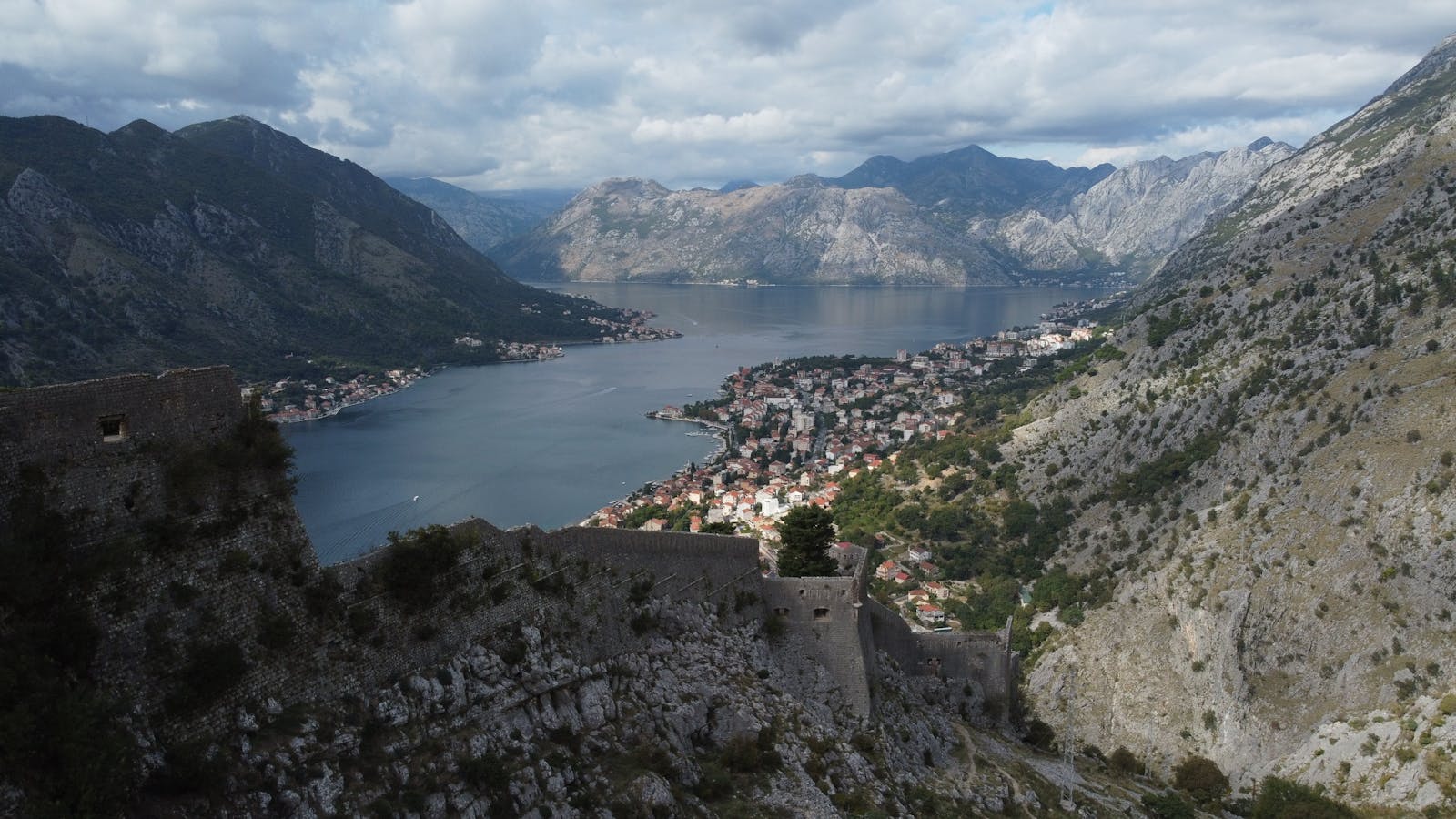
The Bay of Kotor (Boka Kotorska) is one of the most dramatic natural landscapes in Europe — a deep fjord-like inlet surrounded by limestone mountains, with medieval towns clinging to the shoreline. Driving there from Skopje is a full day on the road, but the reward is one of the most beautiful corners of the entire Adriatic coast.
This guide covers the route from Skopje to Kotor, what to see in the bay, and how to plan a 3-5 day Montenegro road trip.
Distance and Drive Time — Kotor Montenegro From Skopje Rental Car
Skopje to Kotor: approximately 520–560 km depending on route
Drive time: 6–7.5 hours including border crossings
This is a committed driving day. Most travelers break the journey in Shkoder (Albania) or Podgorica (Montenegro) and reach Kotor rested the following morning.
The Route
Recommended Route: Via Albania
Skopje → Tetovo → Albania border (Blato/Qafe Thane) →
Peshkopi → Burrel → Tirana bypass → Shkoder →
Montenegro border (Muriqan/Bozaj) → Podgorica →
Budva → Kotor
Total: ~540 km | Drive time: ~7 hours
This route via northern Albania is the most scenic — it passes through the Albanian Alps and along Lake Shkoder before entering Montenegro. The roads through central Albania are good quality two-lane highways.
Alternative: Via North Macedonia West
Skopje → Ohrid → Albania border (Sv. Naum/Lin) →
Pogradec → Tirana bypass → Shkoder →
Montenegro border → Podgorica → Kotor
Total: ~560 km | Drive time: ~7.5 hours
This route passes through Ohrid — worth a stop if time allows. The Ohrid-to-Albania border at Sv. Naum is scenic but slower than the Blato crossing.
Insurance: Green Card Zone 2
Traveling to Montenegro requires Green Card Zone 2 (€80 per rental). This covers:
- Albania
- Montenegro
- Bosnia-Herzegovina
- Croatia
- And all Zone 1 countries
Zone 2 is the right choice for any Western Balkans road trip that extends beyond Kosovo into the Adriatic countries.
Documents at each border:
- Passport
- Driving licence
- Vehicle registration
- Green Card certificate
- Rental authorization letter from Relax Rent a Car
The Bay of Kotor: What to See
The Bay of Kotor is structured like a double bay — the outer bay opens to the Adriatic, while the inner bay (around Kotor itself) is enclosed by mountains up to 1,700 m. Drive around the entire bay in half a day, or spend two days exploring each village properly.
Kotor's old town is a walled city on a flat triangle of land between the mountains and the water. Venetian-era architecture fills the narrow streets — you genuinely cannot tell whether you are in Dubrovnik or somewhere even older.
Key sights:
- St. Tryphon Cathedral (1166) — Kotor's patron saint; the cathedral's Romanesque facade is the postcard image of the town. Treasury contains a remarkable collection of medieval Montenegrin silver
- City Walls Hike — 1,355 steps to St. John Fortress at the top. Allow 1–1.5 hours. The views from the top across the bay are exceptional. Entry fee applies (3–5 EUR)
- Maritime Museum — Kotor was a major Venetian naval port; the museum documents Montenegrin seafaring history in a renovated Baroque palace
- Clock Tower — 17th-century clock tower in the town's main square; the shame stake next to it was used for public punishment
Practical: Kotor old town receives significant day-tripper traffic in July and August. Arrive before 9:00 AM or after 5:00 PM for a calmer experience.
Parking: The main car park is just outside the old town walls. Kotor does not allow vehicle entry into the old town itself. Parking fee approximately 1 EUR/hour in summer.
Perast and the Island Churches
Perast is a Baroque village 8 km north of Kotor by the waterfront road. The town has no traffic and only a single main street along the water — 17 palaces built by Perast's wealthy sea captains in the 17th–18th centuries.
Our Lady of the Rocks (Gospa od Skrpjela) — an artificial island in the bay, built up over centuries by Perast sailors depositing stones after safe returns from voyages. The small church on the island is still operational. Boat taxis depart from Perast's waterfront for the 5-minute crossing (3–5 EUR round trip).
St. George Island — the older natural island next to Our Lady of the Rocks. A Benedictine monastery; not open to visitors but worth photographing.
Driving the Bay Road
The coastal road around the bay offers constant views of the mountains and water. Key stops:
- Risan — oldest settlement in the Bay of Kotor, with Roman mosaics in a private museum (Hypnos mosaic, 3rd century CE)
- Herceg Novi — at the bay's mouth; a pleasant resort town with a medieval fortress and botanical garden
- Tivat — Montenegro's third city; Porto Montenegro luxury marina
Lovcen National Park
From Kotor, the road climbs steeply up the Serpentine Road (25 hairpin bends) to Lovcen National Park. The views back over the bay from the switchbacks are the most photographed in Montenegro.
At the summit (1,749 m): the Njegoš Mausoleum, dedicated to Petar II Petrovic-Njegos, Montenegro's poet-prince. The mausoleum was carved into the mountain by the sculptor Mestrovic in the 1970s. Even if the interior doesn't interest you, the panorama encompasses the bay, the Albanian Alps, and on clear days, the coast of Croatia.
4-Day Montenegro Road Trip from Skopje
Day 1: Skopje to Shkoder
Drive via Tetovo and Albania. Stop in Shkoder (Rozafe Castle, Old Town). Overnight in Shkoder — comfortable hotels from €40/night.
Day 2: Shkoder to Kotor
Cross into Montenegro at Muriqan. Stop at Lake Skadar National Park if time allows — a vast wetland lake shared with Albania, excellent for birdwatching. Arrive Kotor mid-afternoon. Walk the old town.
Day 3: Kotor and Bay
Full day on the bay. Perast in the morning (boat to Our Lady of the Rocks). Kotor city walls hike after lunch. Lovcen sunset drive in the evening.
Day 4: Budva + Return to Skopje
Budva (25 km south of Kotor) is Montenegro's main beach resort. The fortified old town on a small peninsula is compact and photogenic. Beach bars and restaurants along Budva's riviera.
Return to Skopje via Podgorica and Albania (Option B), approximately 6–7 hours.
Practical Information
Currency: Montenegro uses the Euro (EUR) despite not being an EU member. No currency exchange needed.
Fuel: Montenegro has good fuel coverage. Nikola Tesla petrol stations and local brands along the main coastal road.
Accommodation: Kotor old town fills quickly in July–August. Book 3–4 weeks ahead. The surrounding villages (Dobrota, Prcanj, Ljuta) have smaller guesthouses and better availability.
Montenegro speed limits: Motorways 100 km/h, open roads 80 km/h, urban 50 km/h. Traffic police present on coastal roads in summer.
Emergency numbers: Police 122, Ambulance 124, Fire 123.
Recommended Vehicle
- Economy cars: Fine for Kotor and the bay road
- Dacia Duster 4x4: Recommended for the Lovcen serpentine road and any mountain detours toward Durmitor National Park
Book Your Montenegro Road Trip
Pick up at Skopje Airport with Green Card insurance is available as a paid extra (Zone 1: €50/rental, Zone 2: €80/rental). Write "Montenegro/Kotor" in your booking notes.
Relax Rent a Car Skopje Airport has operated since 2001 from Alexander the Great Airport (SKP), serving travellers across North Macedonia and the Western Balkans.
Questions? Call or WhatsApp: +389 71 390 627
Route reference
| Segment | Distance | Time | Notes |
|---|---|---|---|
| Skopje to Ohrid | 173 km | 2h 30 min | A2 motorway, fuel at Veles |
| Ohrid to Bitola | 79 km | 1h 30 min | Mountain pass, slow in winter |
| Skopje to Mavrovo | 79 km | 1h 30 min | Mountain road, snow chains Dec-Feb |
| Skopje to Pristina | 92 km | 1h 30 min | Green Card Zone 1 required |
| Skopje to Tirana | 295 km | 4h 30 min | Albania, Green Card Zone 2 |
| Skopje to Sofia | 245 km | 3h 30 min | Bulgaria, A4 motorway |
Frequently Asked Questions
How long is the drive from Skopje to Kotor? Approximately 5–5.5 hours via Albania and Montenegro, covering 380–400 km. The route goes through Tetovo, the Albanian border, Shkoder, Podgorica, and then the descent to Kotor Bay. It is a full driving day but manageable with a 7:00 AM departure.
What insurance do I need to drive to Montenegro from North Macedonia? Green Card Zone 2 (€80 per rental) covers Montenegro, Albania, Bosnia-Herzegovina, Croatia, Kosovo, Serbia, Greece, and Bulgaria. Montenegro is not an EU member; the Green Card certificate and authorization letter are required at the border.
Is there a faster route from Skopje to Kotor that avoids Albania? Yes — via Serbia and Montenegro. Skopje → Tabanovce border → Nis (Serbia) → Prijepolje → Bijelo Polje (Montenegro) → Podgorica → Kotor. This route is approximately 600 km and 7 hours, avoiding Albania entirely but covering more Serbia and more driving.
Can I park a rental car inside Kotor old town? No. Kotor's walled old city is pedestrianized. The nearest parking is at the north gate (Sjeverena vrata) and along the road outside the walls. In peak season, park at the main car park by the south gate and walk in.
Is the drive into Kotor Bay difficult? The main road into Kotor follows the bay shore and is straightforward. The scenic alternative — the switchback road descending from Mount Lovćen — is narrow and steep but manageable in any car in dry conditions. Allow extra time and take it slowly.