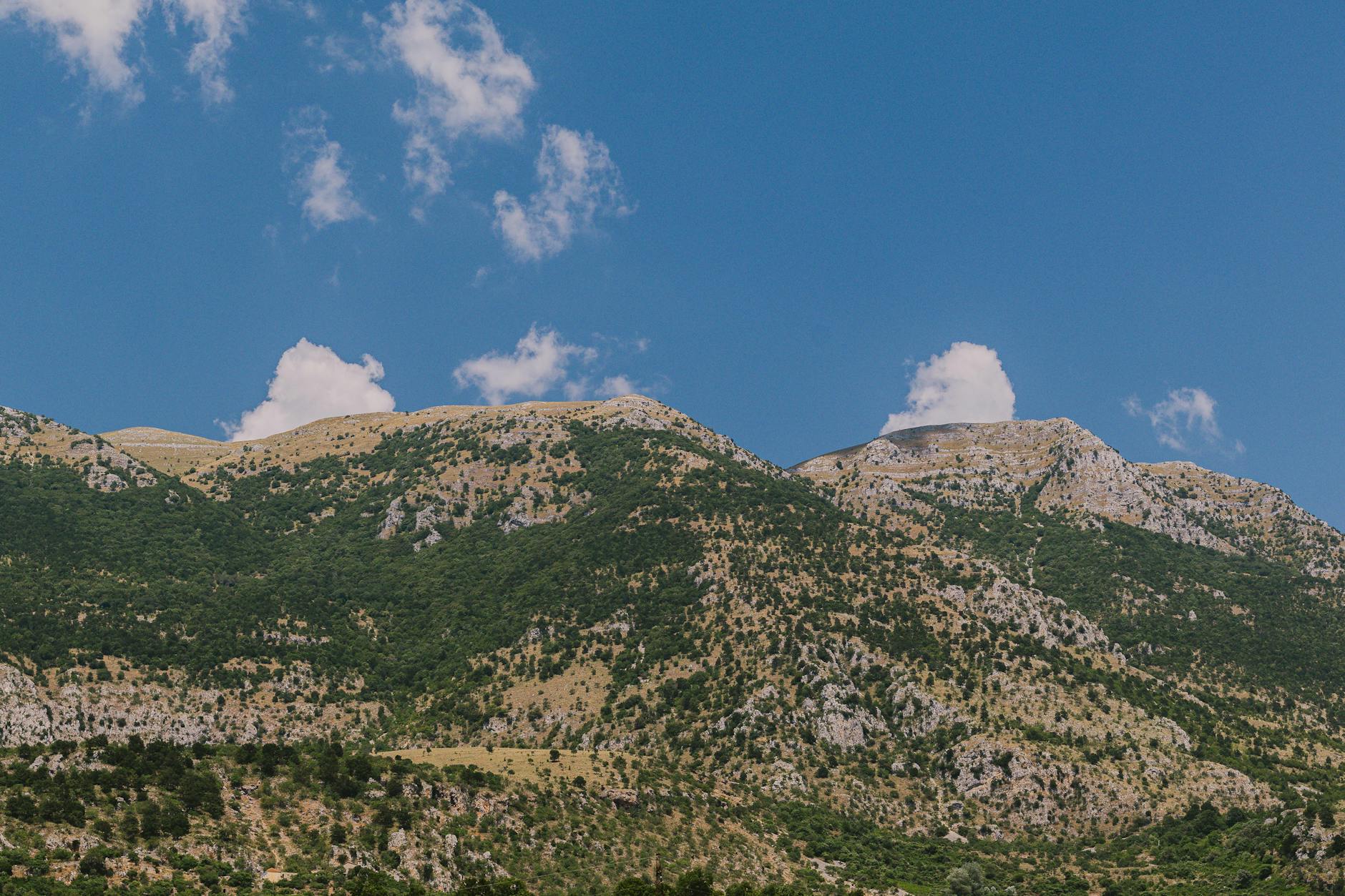
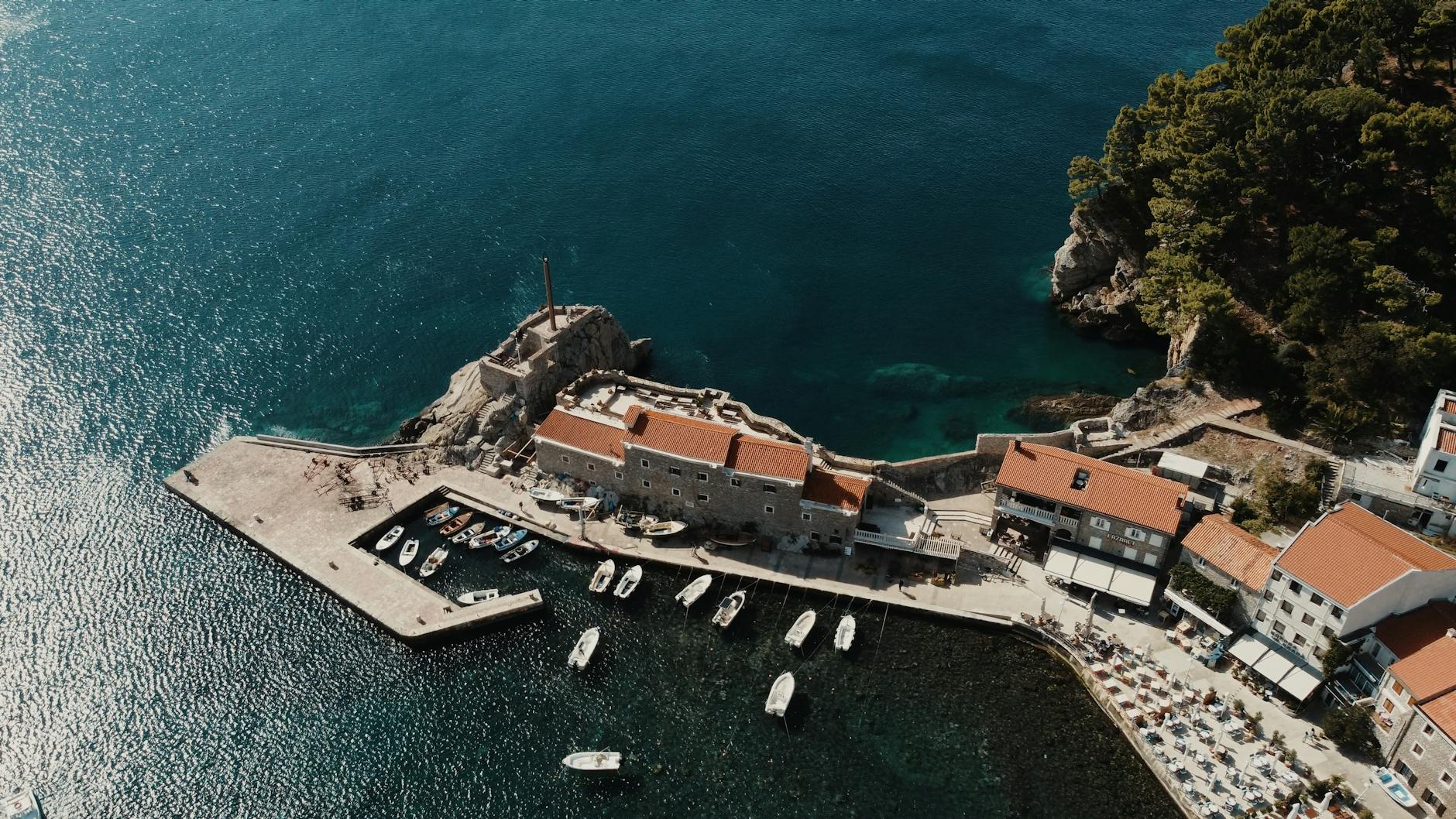
The drive from Skopje to Kotor is roughly 430 kilometres — six to seven hours depending on the route through Albania or Serbia. It is one of the most dramatic road trips in the Western Balkans: mountain passes, the Skadar Lake basin, the descent into the Bay of Kotor. Montenegro also has one of the most interesting food cultures in the region, with a sharp divide between the Adriatic coast (seafood, olive oil, Mediterranean herbs) and the inland mountains (smoked meat, hard cheese, polenta, lamb).
The Two Kitchens of Montenegro
Montenegro's cuisine splits clearly along geography. The narrow coastal strip — Kotor, Budva, Tivat, Herceg Novi — produces a Mediterranean kitchen with seafood, fish, octopus, fresh vegetables, and grilled everything. Drive 40 kilometres inland into the Dinaric mountains and the food shifts completely: smoked prsut, aged Njeguški sir, lamb roasted in the embers, corn porridge. Both traditions are excellent; the contrast in a single trip is one of Montenegro's most memorable aspects.
Mountain Food: The Cetinje Plateau and Beyond
Njeguški Sir (Njegoš Cheese)
The defining Montenegrin product. Njeguški sir is a semi-hard smoked cheese made from a mixture of cow's and sheep's milk, produced in the village of Njeguši on the plateau above Kotor Bay. The curds are pressed, salted in brine, and then cold-smoked over beech and olive wood. The result is a firm, pale yellow cheese with a smooth interior and a distinctive smoked rind. The flavour is milky, slightly salty, with a gentle smokiness that does not overwhelm.
Njeguški sir is sold at roadside stalls on the road from Kotor up to the Lovćen National Park — you will see the stalls as you climb the 25-switchback mountain road. Buy a piece to eat immediately and another to take home. It keeps for weeks in the refrigerator.
Njeguški Prsut (Smoked Ham)
From the same village. Prsut is a dry-cured smoked ham — similar to prosciutto or Spanish jamón but with a more pronounced smokiness from the cold smoking over beech wood in the mountain air. The Njeguši plateau has a specific microclimate, with alternating cold mountain air and Adriatic winds, that creates the ideal conditions for curing. The prsut from here is considered the finest in Montenegro and among the best in the Balkans.
Served sliced thin on a wooden board, usually with Njeguški sir and a glass of local wine or rakija. Do not settle for the plastic-wrapped supermarket version — the stalls at the roadside in Njeguši village sell it cut to order.
Kačamak
A cornmeal porridge similar to Italian polenta but thicker and made with more fat. Montenegrin kačamak is stirred with butter or sheep's tail fat until it has a heavy, almost glutinous texture, then mixed with kajmak (a thick cream) or served alongside white cheese. It is peasant food at its most elemental — extremely filling, very cheap, and comforting on a cold mountain day.
Found at traditional restaurants (konoba) in the Cetinje, Nikšić, and mountain areas. Not typical on the coast.
Lamb (Jagnjetina)
Montenegro produces excellent lamb from sheep that graze the Dinaric mountain pastures. The traditional preparation is under the peka (sač) — a metal dome placed over the meat and vegetables, covered with hot coals and left for hours. The sealed environment steam-roasts the lamb until it falls off the bone in a pool of its own juices. Served with potatoes cooked in the same juices.
Ask at mountain restaurants if they have jagnjetina ispod sača. It is usually prepared in advance and serves a group; you may need to order the day before at some establishments.
Coastal Food: The Bay of Kotor and Budva
Grilled Fish
The Adriatic fish at Kotor, Perast, and Budva is excellent. Sea bass (brancin), sea bream (orada), red mullet (trlja), and dentex (zubatac) are the main options. The standard preparation is grilled whole over charcoal with olive oil, lemon, and blitva (Swiss chard with garlic and olive oil, the universal Adriatic side dish).
Prices are by the kilogram — expect €30–50 per kilo for fresh whole fish. The restaurants directly on the Old Town waterfront in Kotor are more expensive and more touristy; walk five minutes out of the walls for better value.
Octopus (Hobotnica)
Octopus is everywhere on the Montenegrin coast. The standard preparations:
- Hobotnica ispod sača: Octopus slow-cooked under the peka with potatoes and olive oil. Tender, smoky, extraordinary.
- Octopus salad (salata od hobotnice): Cold, sliced octopus with olive oil, lemon, parsley, and capers. A good starter.
- Grilled octopus: Char-grilled whole tentacles. Simpler and slightly drier than sač preparation.
Black Risotto (Crni Rižoto)
Made with cuttlefish and its ink — the rice turns jet black, intensely flavoured with seafood and the distinctive, slightly metallic taste of the cuttlefish ink. Rich and very good. Common in Kotor and Budva restaurants.
Kotor's Fish Market
The small fish market just outside the Old Town walls sells the morning's catch. Locals buy here; tourists often miss it. If you have access to a kitchen, buying fresh fish in the morning and cooking it at your accommodation is the best-value coastal meal option.
Montenegrin Wine
Montenegro has one significant indigenous red grape:
Vranac: The same grape as the North Macedonian Vranec (different spelling, same variety). In Montenegro, the main production region is the Crmnica area near Skadar Lake. The Montenegrin Vranac is typically lighter and more acidic than the Macedonian version, with more red fruit and less tannin. Plantaže winery (near Podgorica) is the country's largest and most accessible producer — their Vranac Pro Corde label is widely distributed.
Krstač: A rare white grape native to Montenegro, producing dry whites with mineral character. Found only in specialised restaurants and direct from small producers.
At coastal restaurants, house wine (kućno vino) is usually Vranac poured from a carafe and costs a fraction of bottled options. The quality varies but is often acceptable.
Montenegrin Drinks
Loza rakija: Grape marc spirit, the standard Montenegrin rakija. Clear, dry, strong. Offered as hospitality before and after meals throughout the country.
Medovina: Honey mead — sweetened fermented honey drink. Found at markets in mountain areas. More of a curiosity than a staple.
Montenegro Gin: A newer product, produced since the tourism boom and sold heavily in coastal bars. Botanicals include wild herbs from the Dinaric mountains. Marketable rather than essential.
Best Food Stops on the Drive
Virpazar (Skadar Lake): A small village at the edge of Skadar Lake, 40 kilometres south of Podgorica. Several konobas serve fresh lake fish (carp, bleak), eel, and crayfish from the lake. Excellent stop for lunch before descending to the coast.
Njeguši village (above Kotor): The roadside stalls selling prsut and sir are the most important food stop on any Montenegro trip. The approach road from Kotor to the Lovćen summit passes directly through the village.
Kotor Old Town: Tight streets with restaurants ranging from excellent to tourist-mediocre. Walk past the first three restaurants you see and find a konoba tucked into a side alley.
Practical Notes
- Currency: Euro (Montenegro uses EUR without EU membership).
- Language: Montenegrin (essentially Serbian with some local vocabulary). English widely spoken on the coast.
- Driving the coastal road: The road along the Bay of Kotor is narrow and winding. Take it slowly — the views are spectacular but the edges are unguarded in places.
- Best season for food: Summer (June–August) for coastal seafood, autumn (September–October) for mountain lamb and the new wine.
To rent a car at Skopje Airport for this road trip, book online here.
Route reference
| Segment | Distance | Time | Notes |
|---|---|---|---|
| Skopje to Ohrid | 173 km | 2h 30 min | A2 motorway, fuel at Veles |
| Ohrid to Bitola | 79 km | 1h 30 min | Mountain pass, slow in winter |
| Skopje to Mavrovo | 79 km | 1h 30 min | Mountain road, snow chains Dec-Feb |
| Skopje to Pristina | 92 km | 1h 30 min | Green Card Zone 1 required |
| Skopje to Tirana | 295 km | 4h 30 min | Albania, Green Card Zone 2 |
| Skopje to Sofia | 245 km | 3h 30 min | Bulgaria, A4 motorway |
Frequently Asked Questions
What is Montenegrin food like? Montenegro's cuisine divides naturally between the coast and the interior. The coast features Adriatic seafood — grilled fish, black risotto, mussels from Boka Bay — with strong Italian influence. The interior relies on meat, dairy, and bread: lamb from Durmitor, Njeguški prsut (dry-cured ham), and the country's famous cheese. Both traditions are worth experiencing.
What is Njeguški prsut and why is it famous? Njeguški prsut is a dry-cured prosciutto-style ham from the village of Njeguši in the mountains above Kotor. The pigs are fed on natural pasture and the hams are smoked, then air-dried in the cold mountain winds. The result is dense, complex, and significantly different from Italian prosciutto. It can be bought at roadside stalls in the Lovćen area and at markets in Kotor and Cetinje.
How far is Kotor from Skopje? Kotor is approximately 430 km from Skopje via the E65 and E762 through Albania, or around 550 km via Serbia and Bosnia. The scenic Albanian coastal route takes about 5.5–6 hours. The journey via Serbia is longer but more motorway driving. Either route requires overnight planning — Kotor is more practical as a 2–3 day trip than a day trip from Skopje.
What is Vranac wine in Montenegro? Vranac is a dark-skinned indigenous grape variety cultivated in Montenegro and North Macedonia. Montenegro's Plantaže winery near Podgorica produces one of the largest Vranac single-vineyard plantings in the world. Vranac wines are full-bodied, deep in colour, with moderate tannins and a distinctive cherry and dark fruit character. They are exported widely and available at Skopje Airport duty-free.
Is Montenegro expensive compared to North Macedonia? Montenegro is noticeably more expensive than North Macedonia, particularly in the coastal towns during summer (June–August). Kotor in peak season rivals Croatian coastal prices. Prices are lower in the interior (Cetinje, Podgorica) and in the shoulder seasons. A restaurant meal in coastal Montenegro costs €15–30 per person in summer; in Podgorica, €8–15 year-round.