
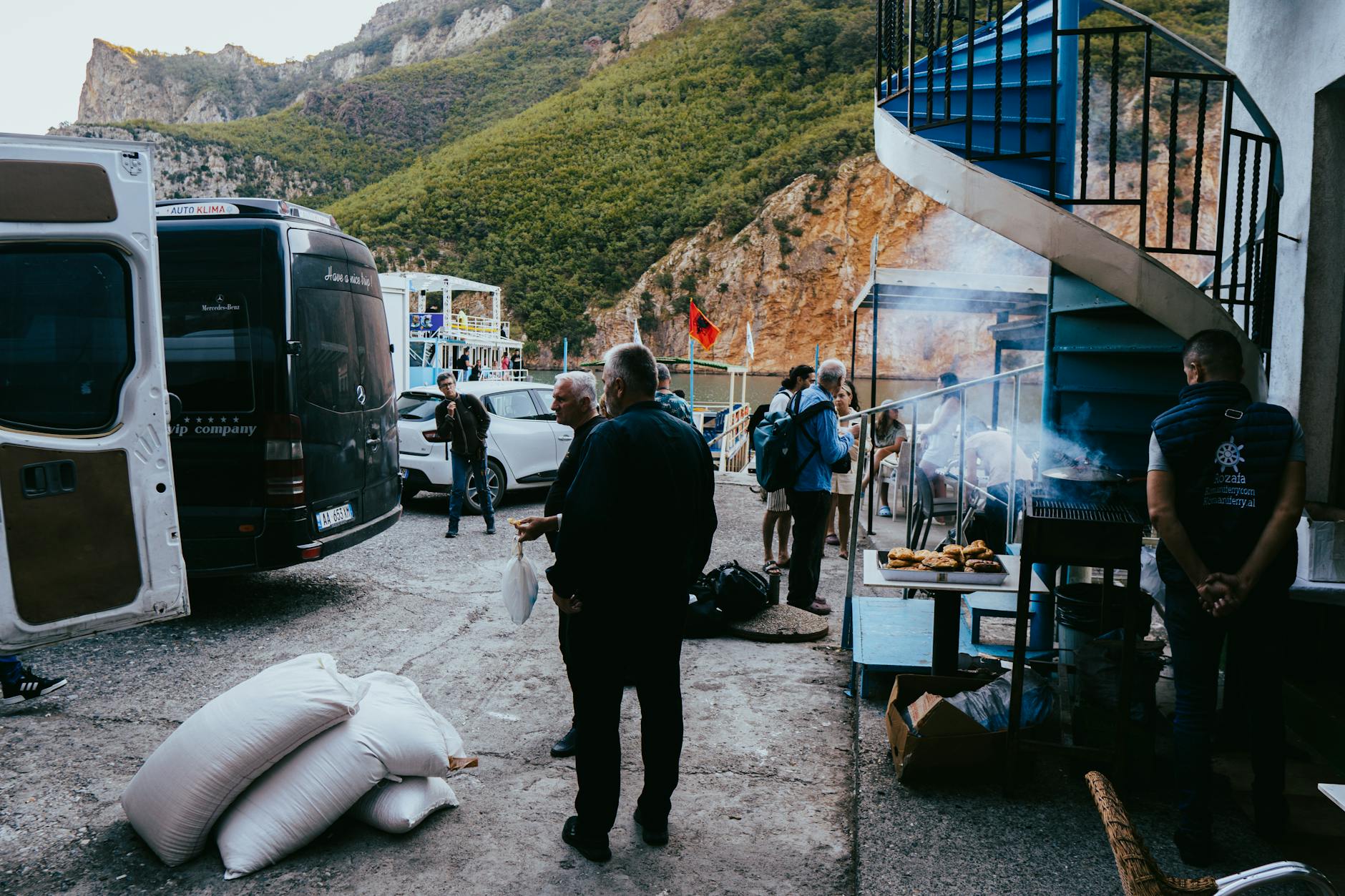
Pristina is 95 kilometres north of Skopje — barely an hour and a half by car, making it the closest capital city to the North Macedonian border. The drive is straightforward along the A2 motorway. Kosovo's food culture is Albanian-speaking and deeply tied to the same Ottoman-Balkan traditions as northern Albania, but with distinct local dishes that reflect the mountainous geography and pastoral economy.
What Makes Kosovo Food Different
Kosovo cuisine shares many dishes with Albanian and Serbian food — byrek, grilled meats, white cheese, slow-cooked legumes — but it has a distinct pastoral character. Sheep's milk products are central: thick yogurt, tangy white cheese, aged hard cheese from the Sharr mountains. Traditional dishes like flija and suxhuk reflect centuries of village cooking, not urban restaurant culture. The food is heavy, filling, and made for cold mountain winters.
Core Dishes
Flija
Kosovo's most unique dish and one of the least-known traditional foods in the Balkans. Flija is a multi-layered crepe dish cooked slowly in a specific way: thin batter is poured into a round pan, partially cooked, another layer added, and the process repeated up to 30 or 40 times. A clay lid with hot coals on top cooks the layers from above simultaneously. The result is a thick, layered, slightly elastic cake that is served warm with cream (kajmak or kajmaki in Kosovo), honey, or sour cream.
Flija takes two to three hours to make properly and is a celebration dish — served at weddings, religious holidays, and family gatherings. It is occasionally found in traditional restaurants in Pristina, but its preparation requires advance planning. If you are invited to a Kosovo home and flija is served, it is a mark of significant hospitality.
Pite (Kosovo Byrek)
Kosovo's version of the layered filo pastry shares roots with Albanian byrek but is often larger and thicker. The most common fillings are:
- Djathë (white cheese — the default)
- Mish (minced meat with onion)
- Spinaq (spinach)
Sold at bakeries (furra) throughout the day. The Pristina variety tends to use more butter in the filo dough than Albanian versions, making it richer.
Suxhuk (Sucuk)
A dried, spiced beef sausage, heavily seasoned with garlic, cumin, and black pepper. Kosovo suxhuk is the local version of the Turkish sucuk, brought by Ottoman influence and now firmly embedded in local food culture. It is eaten as a cold cut at breakfast, grilled and sliced as part of a mixed grill, or fried in a pan and served with eggs.
Sharr mountain suxhuk (from the Sharr/Šar Planina range near Prizren) is considered the finest quality. Look for it at the central market in Pristina or as a packaged product at supermarkets.
Tavë me Mish (Baked Meat)
Similar to Albanian tavë kosi but typically without the yogurt custard topping. Pieces of lamb or goat slow-baked in a clay dish with vegetables, white wine, and herbs. The meat cooks in its own juices for several hours. Found at traditional restaurants (restorant tradicional) in Pristina and smaller towns.
Paçë Koke
Lamb or goat head soup — a traditional breakfast food served at specialist restaurants from very early in the morning (sometimes from 04:00). The broth is rich and gelatinous, seasoned with garlic and vinegar. Paçë is considered a tonic for cold mornings and long working days. Not subtle food, but authentic.
Gjizë me Mjaltë (Fresh Cheese with Honey)
A simple Kosovo breakfast combination: a plate of fresh gjizë (crumbly fresh sheep's milk cheese, similar to ricotta) with a generous drizzle of mountain honey. Served with a cup of coffee and fresh bread. The honey from Kosovo's mountain regions (particularly near Rugova Canyon) is outstanding.
Kosovo Dairy
Kosovo has some of the best sheep's milk dairy products in the Balkans:
Djathë i bardhë: White brined cheese, sharper than Greek feta. Produced throughout Kosovo from sheep's or cow's milk.
Djathë i Sharrit: A hard, aged cheese from the Sharr mountains, made from sheep's milk. Similar to Pecorino in texture, with a salty, concentrated flavour. Find it at the Pristina bazaar.
Kajmaki (Kosovo): The Kosovo spelling and version of kajmak — a thick cream spread made from the film of boiled milk. Milder and less salty than Serbian kajmak, with a clean dairy flavour. Essential with flija and fresh bread.
Kosovo Coffee, Raki and Where to Eat
Kosovo has one of the most active café scenes in the Balkans, disproportionate to the country's size. Pristina's Rr. Nënë Tereza (Mother Teresa Boulevard) and the surrounding streets are lined with cafes that fill from morning to midnight.
Turkish coffee (kafe turke): Strong, unfiltered, served in small cups with the grounds settling at the bottom. A cube of sugar on the side. The correct way to drink it: slowly, in conversation, without rushing.
Macchiato (makinato): Kosovo's café culture has adopted Italian espresso-based drinks enthusiastically. A small macchiato (espresso with a little milk foam) is the most popular order, often costing under €1.
Kosovo coffee quality is genuinely high across the city — even unremarkable-looking cafes produce good espresso. Take your time in a Pristina café. It is a significant part of the local experience.
Kosovo Raki
Kosovo raki is typically grape-based, like Albanian raki, rather than fruit-based like Serbian šljivovica. Homemade raki is common in villages and offered to guests as hospitality. Commercial Kosovo raki is less well-known than Serbian or Albanian varieties.
Where to Eat in Pristina
Pristina Old Bazaar (Sheshi Zahir Pajaziti area): The central market area with traditional food stalls, fresh produce, cheese, and suxhuk. The best place for a lunch of pite and ajvar.
Nënë Tereza Boulevard: The main pedestrian street with cafes and restaurants. Good for coffee and watching Pristina life.
Rr. Luan Haradinaj and surroundings: A neighbourhood with traditional Kosovo restaurants serving tavë and grilled meats in a less touristy setting.
Practical Notes
- Currency: Euro (Kosovo uses EUR without being an EU member). Cards accepted at most Pristina restaurants.
- Border crossing: The Blacë crossing between North Macedonia and Kosovo is the main route. Processing times vary from 10 minutes to over an hour depending on the time of day. Avoid Friday afternoons.
- Language: Albanian. English spoken in Pristina cafes and restaurants.
- Safety: Pristina is safe and the locals are welcoming to visitors.
To rent a car at Skopje Airport for a Kosovo day trip, book online here.
Distances from Skopje by car
| Destination | Distance | Drive time | Road type |
|---|---|---|---|
| Skopje Airport (SKP) | 21 km | 25 min | A1 motorway |
| Matka Canyon | 17 km | 25 min | Paved single-carriageway |
| Ohrid | 173 km | 2h 30 min | A2 motorway |
| Bitola | 169 km | 2h 15 min | A2 + R-roads |
| Tetovo | 41 km | 35 min | A1 motorway |
| Kosovo border (Blace) | 23 km | 25 min | A1 motorway |
| Pristina | 92 km | 1h 30 min | A1 + R-roads |
Frequently Asked Questions
What is Kosovo food like? Kosovo's cuisine is rooted in the same Ottoman and Balkan tradition as North Macedonia and Serbia. Grilled meats, yoghurt, cheese, and bread are central. The strongest local distinctions are flija (a multi-layer crepe-like dish baked over an open fire) and the particular regional varieties of cheese and kajmak found in the western mountains near Peja.
How far is Pristina from Skopje? Pristina is approximately 115 km from Skopje, about 1.5 hours by car via the E65 highway through Bllacë/Blace border crossing. Kosovo and North Macedonia share close cultural and linguistic ties, and the border crossing is usually quick. Pristina is the easiest day trip from Skopje by distance.
Do I need a visa to enter Kosovo from North Macedonia? Citizens of the EU, UK, USA, Canada, and Australia do not require a visa for Kosovo. North Macedonian citizens can enter Kosovo freely. If travelling from Kosovo, note that some countries do not recognise Kosovo as a state, which can create complications — check your specific passport requirements before travel.
What should I eat in Pristina? Start with a flija at a traditional restaurant (the best is prepared fresh and takes 2–3 hours to cook, so look for places that announce it in advance). For something faster, the Germia district has dozens of excellent grilled meat restaurants. The Grand Hotel area in the city centre has good qebaptore for ćevapi.
Is Kosovo expensive for food? Kosovo is one of the cheapest countries in the Balkans for food. A grilled meat meal with bread and a drink at a sit-down restaurant costs €5–8. Coffee (excellent espresso is everywhere in Pristina) is €1–1.50. The city has good-value Italian, Turkish, and Albanian restaurants in addition to local cuisine.