Ohrid's Old Town is a living museum — a labyrinth of cobblestone streets, medieval churches, and traditional houses cascading down to the crystal-clear waters of Lake Ohrid. As one of only 28 sites worldwide recognized by UNESCO for both natural and cultural significance, this ancient town rewards curious explorers with discoveries at every turn.
Walking Tour Route (3-4 hours)
Starting Point: Upper Gate (Gorna Porta)
Begin your journey at the ancient Upper Gate, the main entrance to Ohrid's fortified old town. This 10th-century gate once formed part of the city's defensive walls and offers your first glimpse of the medieval architecture that awaits.
Parking Tip: If driving, use the pay-and-display parking near the gate (€1/hour) or the larger lot at the Antique Theater.
Stop 1: Church of St. Sophia (Sveta Sofija)
Distance from start: 2 minutes
Time needed: 20-30 minutes
This 11th-century cathedral represents the pinnacle of Macedonian medieval architecture. Highlights include:
- Byzantine Frescoes: Marvel at the 11th-century frescoes depicting scenes from the life of Christ
- Architectural Details: Note the combination of Byzantine and Romanesque elements
- Acoustics: The cathedral's natural acoustics make it a venue for the annual Ohrid Summer Festival
Entrance: €2 (free during religious services)
Stop 2: Ancient Theater
Distance: 5 minutes walk
Time needed: 15-20 minutes
Built in approximately 200 BC during the Hellenistic period, this remarkably preserved open-air theatre once hosted theatrical performances and public gatherings. Rediscovered in the 1980s, it now serves as the main venue for the Ohrid Summer Festival.
- Capacity: Original 5,000-7,000 spectators
- Architecture: Classical Greek design with Roman modifications
- Views: Excellent photo opportunities of the lake below
Best Photo Spot: The top rows offer panoramic views of Lake Ohrid
Stop 3: Church of St. Mary Peribleptos (Sveta Bogorodica Perivlepta)
Distance: 8 minutes walk downhill
Time needed: 20-25 minutes
Built in 1295, this 13th-century church houses some of North Macedonia's finest medieval frescoes:
- Family Tree of Christ: A unique fresco depicting Christ's lineage
- Portrait of Mary: Considered one of the most beautiful Marian depictions in Balkan art
- Exterior Views: The church courtyard offers stunning lake vistas
Entrance: €2
Note: Photography without flash permitted
Stop 4: Tsar Samuel's Fortress
Distance: 10 minutes uphill walk
Time needed: 45-60 minutes
Towering over the old town, this massive fortress was the stronghold of Tsar Samuel's First Bulgarian Empire in the 10th-11th centuries.
What to See:
- Reconstructed Walls: Walk along the ramparts for panoramic views
- Inner Courtyard: Archaeological remains and exhibitions
- Viewpoint: 360-degree views of Ohrid, Lake Ohrid, and surrounding mountains
Entrance: €3
Best Time: Late afternoon for golden hour photography
Stop 5: Church of St. John at Kaneo (Sveta Jovan Kaneo)
Distance: 15 minutes walk along the cliffs
Time needed: 30-45 minutes
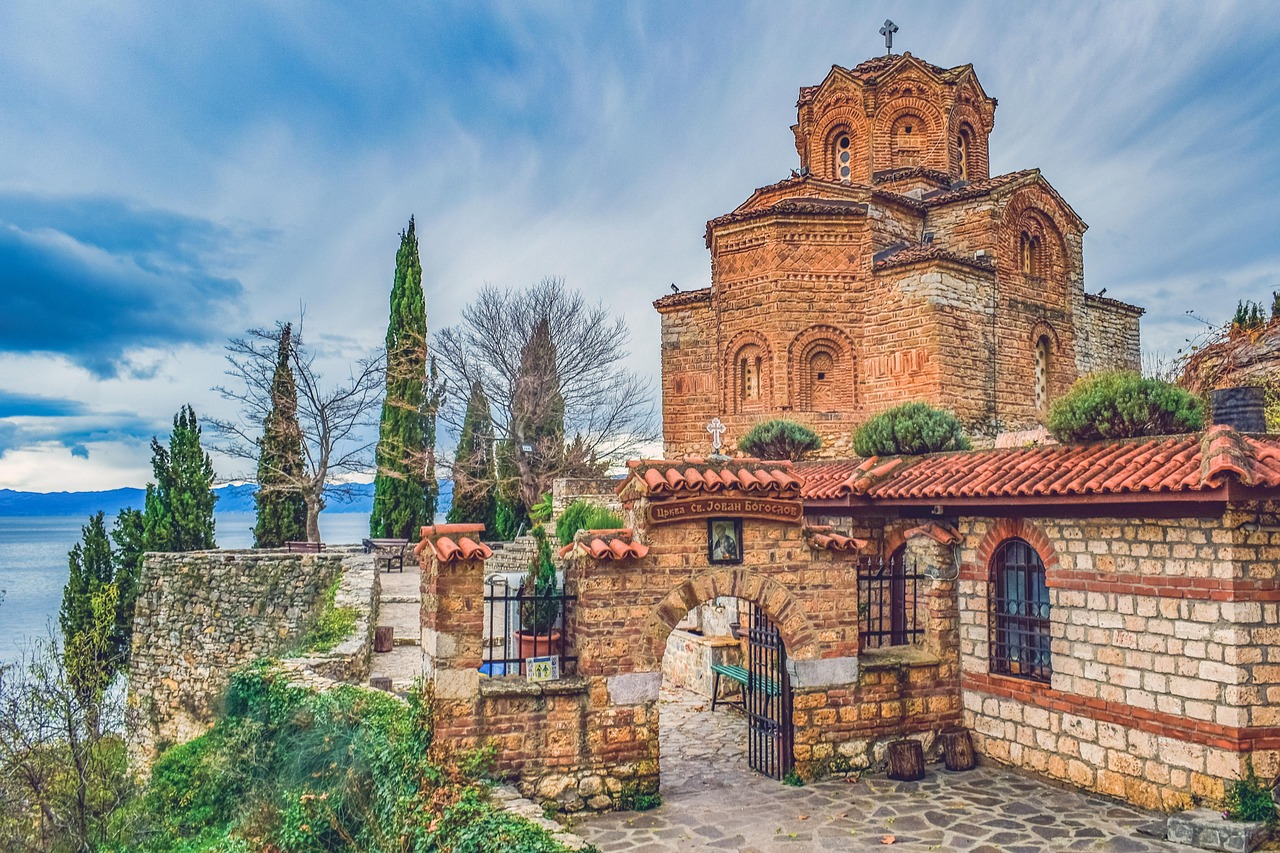
The most photographed church in North Macedonia, this 13th-century gem sits dramatically on a rocky promontory overlooking the lake.
- Iconic Views: The church with Lake Ohrid as backdrop is unforgettable
- Architecture: Combination of Byzantine and Armenian architectural styles
- Sunset Spot: Arrive 1 hour before sunset for the best light
Entrance: Free
Pro Tip: Bring a wide-angle lens for photography
Stop 6: Old Bazaar and Traditional Houses
Distance: 10 minutes walk
Time needed: 30-45 minutes
Wander through the narrow cobblestone streets of the traditional bazaar area:
- Architecture: 18th-19th century Ohrid-style houses with bay windows
- Shops: Local artisans selling Ohrid pearls, traditional crafts, and souvenirs
- Robev House: Visit this beautifully preserved 19th-century mansion (€1 entrance)
Shopping: Look for authentic Ohrid pearls — but buy from reputable dealers
Extended Route Additions
For those with more time, add these stops:
St. Panteleimon Monastery (Plaošnik)
Additional time: 1 hour
This reconstructed 10th-century monastery complex includes:
- St. Clement's Church: Built by St. Clement of Ohrid himself
- Archaeological Site: Early Christian basilica remains
- Museum: Exhibitions on Ohrid's medieval history
Church of St. Nicholas Bolnički
Additional time: 20 minutes
A small 14th-century church with exceptional frescoes, located in a quieter part of the old town away from tourist crowds.
Where to Eat Along the Route
Traditional Macedonian
Restaurant Antiko (near St. Sophia)
- Authentic Ohrid trout (prepared "na žar" — grilled)
- Traditional selsko meso (meat stew)
- Lakeside terrace seating
Kaneo Restaurant (near St. John Church)
- Spectacular views of the church and lake
- Fresh fish specialties
- Higher prices but worth it for the view
Quick Bites
Old Town Bakeries
- Burek (savory pastry) for €1-2
- Traditional Ohrid-style bread
Practical Tips
What to Wear
- Comfortable Walking Shoes: Cobblestones are slippery and uneven
- Modest Clothing: Required for church visits (covered shoulders and knees)
- Sun Protection: Limited shade in summer
- Layers: Temperatures drop in the evening
Photography Tips
- Morning: Best light for St. Sophia and the Ancient Theater
- Golden Hour: Perfect for St. John at Kaneo (1 hour before sunset)
- Blue Hour: Capture the old town lights reflecting on the lake
Accessibility
- Challenging Terrain: Steep cobblestone streets and many stairs
- Not Suitable For: Wheelchairs or strollers in most areas
- Alternative: Drive to individual sites using the lakeside road
Historical Context
Ohrid's significance extends far beyond its beauty:
- Ancient History: Founded as Lychnidos in the 4th century BC
- Spiritual Center: Once home to 365 churches (one for each day of the year)
- Literary Heritage: Where Cyrillic script was developed by St. Clement
- Trade Hub: Important stop on medieval trade routes
Best Times to Visit
Spring (April-May): Comfortable temperatures, wildflowers, fewer tourists
Summer (June-August): Peak season, warmest weather for swimming, crowded
Autumn (September-October): Harvest season, golden light, local festivals
Winter (November-March): Peaceful, some churches closed, atmospheric
Guided Tour vs. Self-Guided
Self-Guided:
- Pros: Flexibility, no schedule, free
- Cons: Miss historical context, may miss hidden gems
Guided Tours:
- Available: Daily from the Tourist Information Center (€15-25)
- Pros: Expert knowledge, skip lines, hidden spots
- Cons: Fixed schedule, groups of 10-15 people
Beyond the Walking Tour
Extend your Ohrid experience with:
- Boat Trip: To St. Naum Monastery (half-day)
- Beach Time: Municipality Beach or Kaneo Beach
- Museum Visit: Icon Gallery and Robev House Museum
- Day Trip: Sveti Naum and the Albanian border region
Why Ohrid Old Town is Special
Unlike many "old towns" that have become tourist theme parks, Ohrid's historic center remains a living community. Local families still inhabit the traditional houses, churches hold regular services, and the cobblestone streets echo with daily life. Walking these streets connects you to centuries of history while experiencing authentic Macedonian culture.
Planning your visit? Check our Ohrid car rental guide for the best way to explore the lake region and beyond.
Distances from Skopje by car
| Destination | Distance | Drive time | Road type |
|---|---|---|---|
| Skopje Airport (SKP) | 21 km | 25 min | A1 motorway |
| Matka Canyon | 17 km | 25 min | Paved single-carriageway |
| Ohrid | 173 km | 2h 30 min | A2 motorway |
| Bitola | 169 km | 2h 15 min | A2 + R-roads |
| Tetovo | 41 km | 35 min | A1 motorway |
| Kosovo border (Blace) | 23 km | 25 min | A1 motorway |
| Pristina | 92 km | 1h 30 min | A1 + R-roads |
Frequently Asked Questions
What documents do I need to rent Ohrid Old Town Walking?
Valid driving licence (held for at least 1 year), passport or national ID for non-EU drivers, and a confirmed booking. No credit card required at booking or pickup — payment is on arrival in cash (EUR/MKD) or by card. International driving permit only required if your licence is in non-Latin script.
Can someone else collect the car on my behalf?
Only if they're the named additional driver on the contract, paid the +€2/day fee, and present at pickup with their own ID and licence. Otherwise no — the car must be released to the named main driver at the booking confirmation. This protects against fraud and licence-mismatch insurance issues.
What's the minimum age to rent a car in North Macedonia?
21 for all vehicle categories — Mini, Economy, Compact, SUV (Dacia Duster), and 7-seater vans. Drivers aged 21–25 pay a €10/day young-driver surcharge. There's no upper age limit, but drivers over 70 must present a recent eye-exam certificate (most pass without issue).
What if my licence is digital-only (no plastic card)?
Bring a printed copy AND the digital app open at pickup. Some countries (Norway, Australia) issue mobile-only licences. The rental contract requires a physical document for the paperwork, so we accept a printed PDF of the digital licence as a stand-in. Always also carry your passport for ID cross-check.
Can a tourist rent if their home country is on a sanctions list?
Yes — North Macedonia doesn't impose travel-related sanctions on individual tourists. Russian, Iranian, Chinese, and similar passport holders are all welcome to rent. Documentation requirements are the same as for any nationality: licence, passport, payment at pickup.