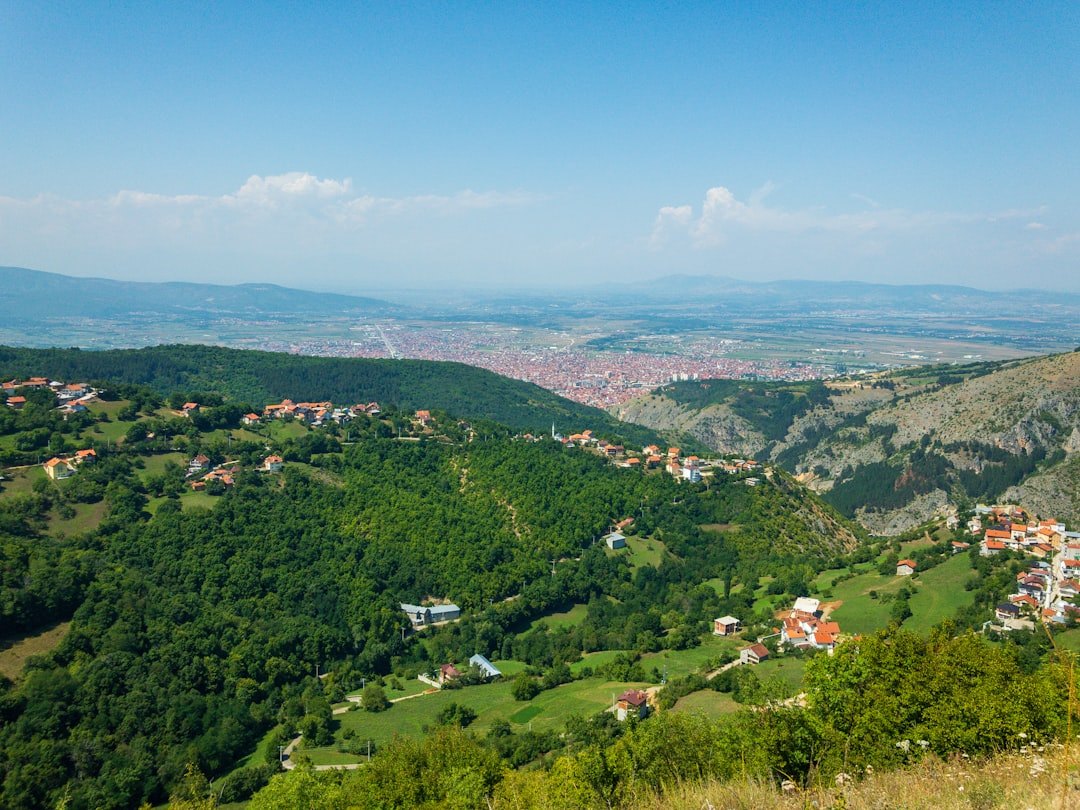
Kosovo is North Macedonia's northern neighbor — and one of Europe's least visited, most surprising countries. Partially recognized (by 116 UN member states as of 2026), Kosovo has built a functioning state with remarkable speed since its 2008 declaration of independence. With a rental car from Skopje, Kosovo is an easy multi-day trip that offers a genuinely different perspective on the western Balkans.
Border Crossings from North Macedonia
Kosovo and North Macedonia share a border with several crossing points:
Tabanovce/Blace (Main crossing): 50 km north of Skopje, this crossing handles the most traffic. On the A1 motorway northbound, fork northeast before the Serbia turn. Wait times: 15–45 minutes, occasionally longer on weekends.
Jazhince/Globočica: A quieter crossing used by locals, between the Šar Planina mountain range. The road approaches are scenic but slower. Less traffic than Blace.
Džepčište/Brod: A third crossing point near Tetovo, for travelers approaching from western Macedonia. Rarely used by tourists.
Documents needed:
- Valid passport (Kosovo does not yet accept entry on ID cards)
- Green Card insurance covering Kosovo — confirm with Relax Rent a Car when booking
- Vehicle registration
Important: Serbian citizens cannot enter Kosovo at these crossings. EU and most Western passport holders have no issues.
Pristina: The Capital
Distance from Skopje: 90 km, ~1.5 hours
Pristina is a young, energetic capital — almost literally young, as Kosovo has one of Europe's youngest populations (average age around 28). The city is chaotic, under constant construction, and alive with cafés, restaurants, and a genuine sense of momentum.
What to See in Pristina
Kosovo Museum: The national museum with collections covering the Neolithic, Illyrian, Roman, and medieval periods. The prehistoric Goddess on the Throne (Hyjnesha mbi fron) — a 6,000-year-old terracotta figurine — is the country's most important cultural artifact.
Bill Clinton Boulevard: One of the world's more unusual street names. A large statue of Clinton stands on the street named after him — a legacy of US involvement in the 1999 NATO intervention. The Hilary Clinton Boulevard nearby adds to the American-themed geography.
Cathedral of Saint Mother Teresa: Completed in 2017. A large modern cathedral named for the Skopje-born nun of Albanian heritage.
Newborn Monument: A large block letters installation (spelling "NEWBORN") placed in front of the government buildings on the day of Kosovo's independence declaration (February 17, 2008). The letters are repainted each year on the anniversary with a new theme.
Grand Hotel: The brutalist 1970s socialist-era hotel in the city center. Still operating. Its rooftop bar has unparalleled views over the city and, on clear days, toward the Šar Planina mountains in Macedonia.
2BornFree Streetwear and local café scene: Kosovo's café culture rivals Vienna's for intensity. Locals spend hours in cafés. Try macchiato (Pristina's preferred coffee style — espresso with a dash of milk, served without ceremony).
Pristina Food
- Flija: A layered crepe-like dish cooked over embers. Traditional Kosovo wedding food — rare in restaurants but worth seeking out. Ask your hotel.
- Ćevapi: Albanian Kosovan qebapa slightly different from Macedonian version — larger, spicier, with more beef.
- Burek from traditional bakeries: Excellent in Pristina. Old Market area is the best hunting ground.
- Rugova cheese: A semi-hard sheep's cheese from the Rugova Valley. Available in markets.
Prizren: Kosovo's Cultural Capital
Distance from Pristina: 80 km south, ~1 hour Distance from Skopje: 160 km, ~2.5 hours
Prizren is many travelers' favorite city in Kosovo — a beautifully preserved Ottoman town on the Bistrica River with a distinctive skyline of minarets and the ruins of a Byzantine-Serbian fortress above.
What to See in Prizren
Prizren Fortress (Kalaja): The fortress ruins above the city offer panoramic views. The walk from the old town takes 20 minutes. A café operates inside the walls.
Sinan Pasha Mosque: A 16th-century mosque on the riverside, one of the most architecturally refined Ottoman structures in Kosovo.
Gazi Mehmet Pasha Hammam: A well-preserved 16th-century bathhouse, partially restored and open as a cultural venue.
Katedral e Shën Gjergj (St. George Cathedral): A 14th-century Serbian Orthodox church (damaged in 2004 post-war riots and partially restored). Part of the complex history of the city.
League of Prizren: The site where Albanian leaders met in 1878 to advocate for Albanian autonomy within the Ottoman Empire — one of the founding moments of modern Albanian national consciousness. A museum occupies the original building.
The Old Bazaar (Čaršija): The compact old town bazaar with traditional crafts (particularly silver filigree jewelry — Prizren's specialty), cafés, and restaurants. Excellent for an evening walk.
Prizren's most enjoyable activity: Sit at a riverside café along the Bistrica in the evening, drinking a cold Peja beer as the city's illuminated minarets and the fortress walls are reflected in the water. One of the most pleasant café settings in the Balkans.
Rugova Canyon and the Accursed Mountains
Distance from Pristina: 100 km northwest, ~1.5 hours via Peja
Rugova Canyon is Kosovo's Grand Canyon — a 25 km long, 1,000 m deep limestone gorge cut by the Lumbardh River west of Peja (Peć). The canyon road (recently paved throughout) is one of the most spectacular drives in the region.
Peja (Peć): Kosovo's third city, 90 km from Pristina. Visit:
- Patriarchate of Peć (Patriarchana): A 13th-century Serbian Orthodox monastery at the entrance to Rugova Canyon. One of the most important sites in Serbian Orthodox heritage — active monastery with monks resident. Guided tours available.
- Peja Old Bazaar: Smaller but authentic Ottoman bazaar. Try kos (thick sheep's yoghurt) from local vendors.
Into the Accursed Mountains (Bjeshkët e Namuna): From the top of the Rugova Canyon, the road continues into the Prokletije mountain range (Accursed Mountains — straddling Kosovo, Albania, and Montenegro). Magnificent alpine scenery, traditional highland villages, and excellent hiking.
The Valbona–Theth trekking route (entering Kosovo from Albania via the Valbona Valley and crossing into Montenegro via Theth) has become one of Europe's premier multi-day hiking routes. For car-based travelers, the canyon road offers most of the scenery without the full commitment.
Skopje to Kosovo Practical Notes
Fuel: Kosovo uses EUR. Petrol prices are slightly higher than North Macedonia.
Mobile: Kosovo is not in the EU, so EU roaming rules don't apply. Check with your mobile provider. Local SIM cards (VALA, IPKO) are cheap and available at the airport and city centers.
Language: Albanian is the primary language. Serbian is also official. English widely spoken among younger people.
Safety: Kosovo is safe for travelers. The main risks are traffic (driving standards are variable) and mountain roads (where care is needed).
Kosovo and Serbia: Kosovo is not recognized by Serbia, meaning a Kosovo stamp in your passport may technically cause issues if you then try to enter Serbia via normal routes. In practice, Serbian border officials usually don't ask about Kosovo, and this is rarely an issue for non-Serbian passport holders. If you plan to visit both Kosovo and Serbia on the same trip, enter Serbia first, then Kosovo.
Suggested Itinerary: 3-Day Kosovo Loop
Day 1: Skopje → Blace border → Pristina (arrive afternoon). Afternoon: New Born monument, Pristina streets. Evening: dinner and café culture.
Day 2: Pristina → Prizren (morning). Fortress, old bazaar, lunch by the river. Afternoon: drive to Peja (1 hour). Evening: Peja.
Day 3: Peja → Rugova Canyon drive. Patriarchate of Peć. Return to Pristina and south to Skopje (arrive evening).
Ready to explore Kosovo? Rent a car at Skopje Airport — Kosovo is just 90 km north. For a shorter Kosovo visit, see our Kosovo day trip guide.
Route reference
| Segment | Distance | Time | Notes |
|---|---|---|---|
| Skopje to Ohrid | 173 km | 2h 30 min | A2 motorway, fuel at Veles |
| Ohrid to Bitola | 79 km | 1h 30 min | Mountain pass, slow in winter |
| Skopje to Mavrovo | 79 km | 1h 30 min | Mountain road, snow chains Dec-Feb |
| Skopje to Pristina | 92 km | 1h 30 min | Green Card Zone 1 required |
| Skopje to Tirana | 295 km | 4h 30 min | Albania, Green Card Zone 2 |
| Skopje to Sofia | 245 km | 3h 30 min | Bulgaria, A4 motorway |
Frequently Asked Questions
Can I add a second driver to the insurance?
Yes, additional driver fee is €2/day. The second driver must be present at pickup with their own driving licence and passport. They're then named on the contract and insurance applies equally to either driver. Spouses/partners often share the cost over a longer rental.
Will my credit card travel insurance cover the CDW excess?
Some cards (Visa Signature, Mastercard World Elite, American Express Platinum) cover rental CDW excess globally. Check your specific benefit guide — most require declining the rental company's CDW upgrade entirely and paying with that card. If the card requires using its own insurance, our own Basic CDW is still available as a fallback at €7/day.
What insurance is included in the daily rate for Driving in Kosovo from?
Third-Party Liability and Theft Protection (TP) are included automatically in every rental — both legally mandatory in North Macedonia. Collision Damage Waiver (CDW) is a paid optional extra at €7/day; it caps your liability for damage to the vehicle at a €200 excess (you pay up to €200 on any claim, we cover the rest). Prefer zero excess? Full insurance is €15/day.
Does insurance cover under-25 drivers?
Yes, with a €10/day young-driver surcharge for drivers aged 21–25. The minimum rental age is 21. The surcharge applies even with a clean licence — it's a statistical risk premium across the rental industry.
Do I need a Green Card to drive into Albania or Kosovo?
Yes. North Macedonian insurance doesn't automatically extend across borders. Green Card Zone 1 (€50) adds Albania, Kosovo, Serbia, Montenegro, Bosnia, and Bulgaria. Zone 2 (€80) extends to Greece. We hand it over at pickup; no separate insurance company contact.