For travellers comparing Croatia from Skopje by car choices in 2026: this article lays out the rates, the booking process, and the gotchas around croatia from skopje road trip.
Croatia is the most popular Balkan summer destination in Europe, and from Skopje it is entirely reachable by car. The drive to Split takes roughly 7–8 hours depending on your route; Dubrovnik is 8.5–10 hours. These are long days, but the routes pass through some of the most spectacular landscapes in the region: Montenegro's Bay of Kotor, Bosnia's Neretva valley, or the interior of North Macedonia and Serbia depending on which way you go. Most drivers break the journey overnight and turn the transit into part of the trip.
This guide covers both main routes, the insurance you'll need, border crossings, and how to make the most of the drive.
Key Distances and Driving Times — Croatia From Skopje By Car: Road Trip Guide To Dubrovnik And Split
| Destination | Via Montenegro | Via Serbia |
|---|---|---|
| Dubrovnik | 750 km / 9–10h | Not practical |
| Split | 680 km / 7.5–8.5h | 850 km / 9–10h |
| Zadar | 750 km / 8–9h | 880 km / 9.5–10.5h |
| Zagreb | 940 km / 10–11h | 850 km / 9–10h |
Times include border crossings (variable) but not rest stops. In summer (July–August), add 30–90 minutes for Croatian border queue times.
Insurance: Green Card Required
This is the most important practical point: If you plan to drive into Croatia (an EU member state) via Bosnia (not EU) or Montenegro (not EU), your rental car must have Green Card documentation covering all countries you transit through.
Our standard insurance covers North Macedonia only. Cross-border coverage must be arranged at booking — do not assume it is included.
Green Card extension for the Croatia road trip:
- North Macedonia → Serbia → Croatia: Requires extensions for Serbia + Croatia
- North Macedonia → Kosovo → Albania → Montenegro → Bosnia → Croatia: Requires all countries along the route
Tell us exactly which countries you plan to transit when you book. We prepare the Green Card documentation in advance. See our cross-border driving guide for the full details.
Route Option 1: Via Montenegro (Recommended for Dubrovnik)
Skopje → Ohrid → Pogradec (Albania) → Podgorica (Montenegro) → Kotor → Dubrovnik
This is the most scenic route and the one most drivers choose. It passes through two countries (Albania and Montenegro) before reaching Croatia, with the Bay of Kotor as the highlight of the transit.
Day 1: Skopje to Kotor (540 km, 6.5–7.5 hours)
Leave Skopje early — by 07:00 ideally. Take the A2 motorway west toward Tetovo and Gostivar, then south toward Ohrid.
Option: Pass through Ohrid (adds 1 hour) for a coffee stop, or bypass via the bypass road if you've already seen it.
From Ohrid, head south through Struga to the Albanian border at Kjafasan. The crossing into Albania is usually quick (15–30 minutes for EU/UK passport holders). Drive south along Lake Ohrid's Albanian shore to Pogradec, then southwest toward Elbasan and Tirana.
Tirana bypass: You can avoid central Tirana by following the ring road signs — the city centre adds unnecessary time. Continue north from Tirana toward Shkodra and the Montenegro border.
The Shkodra–Montenegro border at Muriqan is the standard crossing. Cross into Montenegro, follow the coast road toward Bar and Budva.
Stop at Kotor for the night. The Bay of Kotor — a flooded river canyon that resembles a Mediterranean fjord — is one of the great views of southern Europe. The old walled city of Kotor is UNESCO-listed. See our Montenegro from Skopje guide for more.
Sleep in Kotor or Budva — both have plentiful accommodation. Book ahead in July and August.
Day 2: Kotor to Dubrovnik (120 km, 2–3 hours)
The Adriatic coastal road from Kotor to Dubrovnik is one of the most beautiful drives in Europe. Wind north along the coast, cross into Croatia at the Debeli Brijeg border (the main Montenegro–Croatia crossing on the coast road). In summer, this crossing can have 45–90 minute queues. The alternative Karasovići crossing further inland is sometimes faster.
Arrive in Dubrovnik with the day ahead of you.
Route Option 2: Via Serbia (Best for Split and Northern Croatia)
Skopje → Niš (Serbia) → Belgrade → Zagreb → Split or Zadar
This route avoids the Adriatic coast entirely and is faster for northern Croatia. It lacks the scenic drama of the Montenegro route but is a straightforward motorway drive.
Day 1: Skopje to Belgrade (580 km, 5.5–6 hours). The A1 north to the Serbian border at Tabanovce is fast (1.5 hours from Skopje). Continue north through Niš and Belgrade on the Serbian motorway. The border crossing from North Macedonia to Serbia at Tabanovce is usually quick (15–30 minutes).
Day 2: Belgrade to Split or Zadar. From Belgrade west through Bosnia (via Banja Luka) or via the Croatian border at Bajakovo. Zagreb is roughly 400 km from Belgrade (4 hours); Split is 560 km from Belgrade (6 hours via the A1/D1 split).
Border Crossings: Practical Notes
North Macedonia → Albania (Kjafasan/Qafa Thanë): Usually 15–30 minutes. Queues in summer on weekends.
Albania → Montenegro (Muriqan): Usually 20–45 minutes. Can be busy in July–August.
Montenegro → Croatia (Debeli Brijeg/Karasovići): Most variable. July–August queues of 1–2 hours are common on the coastal crossing. Start early or cross at midday to avoid peak times.
North Macedonia → Serbia (Tabanovce/Preševo): Usually fast, 15–20 minutes. Serbia is not in the EU — your passport is stamped.
Serbia → Croatia (Bajakovo): EU outer border crossing. Can have queues in summer on weekends.
Driving in Croatia
Croatia is an EU member state with EU-standard roads. Speed limits: 50 urban, 90 rural, 130 motorway. Motorways are tolled — ENC (electronic tag) or cash at toll booths. Carry euros for tolls; cards are also accepted at most booths.
Fuel in Croatia: More expensive than North Macedonia. Fill up in Bosnia or Montenegro before entering Croatia if you're heading to Dubrovnik.
Parking in Dubrovnik: The old city is car-free. Use the Ilijina Glavica parking above the old town (cable car access to the walls) or the Gruz harbour area. In summer, arrive before 09:00 or parking becomes very difficult. Traffic restrictions apply on the coastal road in peak summer.
What to See on the Route
Montenegro: Bay of Kotor, Kotor Old Town (UNESCO), Budva beach strip, Cetinje (old royal capital). Our Montenegro guide covers all of these.
Albania en route: Shkodra lake and castle (30-minute detour), Tirana's Blloku district for coffee.
Bosnia (if using the northern route): Mostar (the Stari Most bridge) is 3 hours from the Belgrade–Split route. Worth it for a night. See our Bosnia guide.
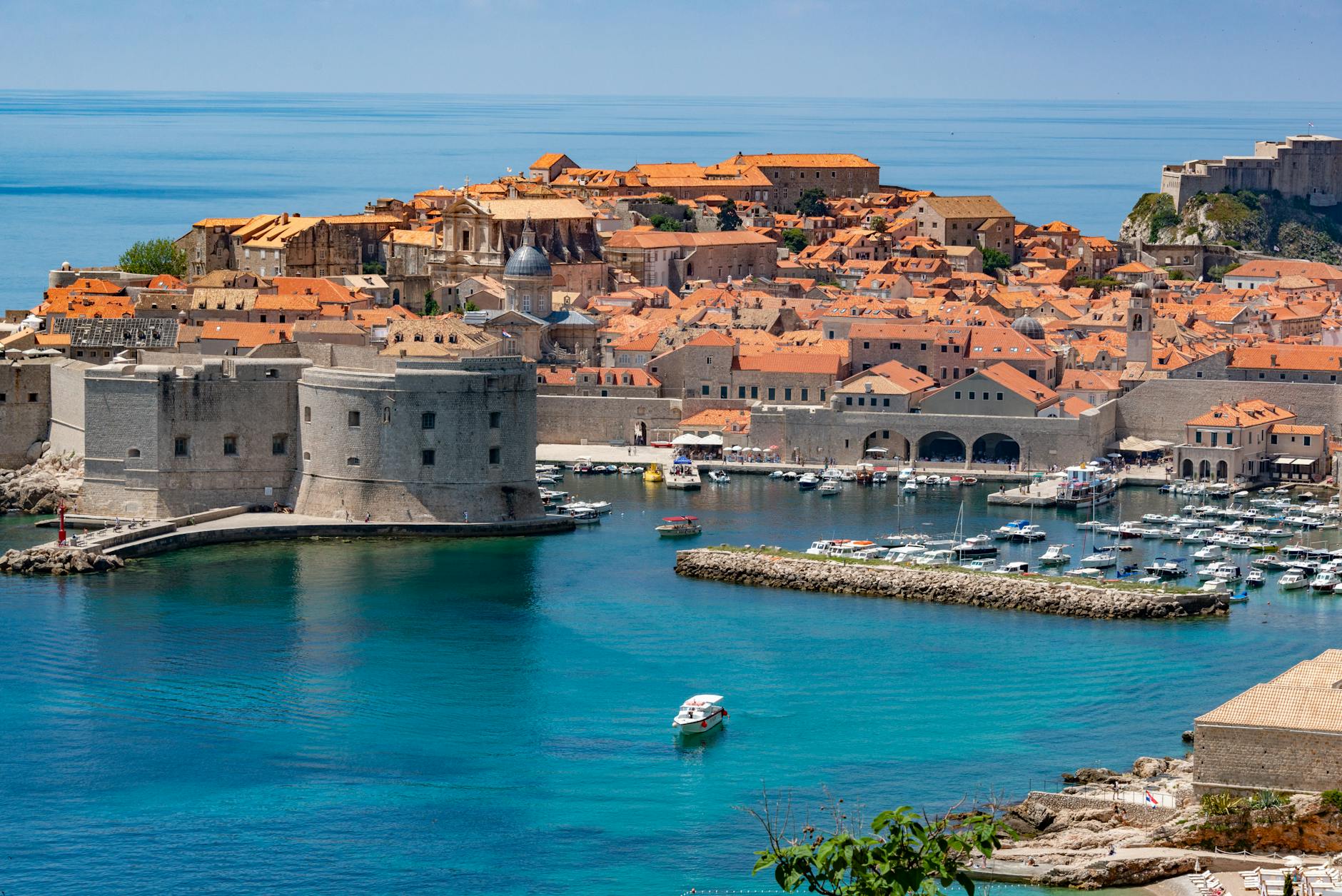
Croatia: Dubrovnik's walls, Split's Diocletian's Palace, Plitvice Lakes (on the way to Zagreb), Zadar's sea organ.
Practical Summary
| Item | Detail |
|---|---|
| Green Card insurance | Required — arrange at booking |
| Best route for Dubrovnik | Via Montenegro (scenic, 9–10 hours) |
| Best route for Split/Zagreb | Via Serbia (faster, 8–10 hours) |
| Fuel recommendation | Fill in North Macedonia before departure |
| Currency | EUR accepted in Montenegro; Bosnian KM in Bosnia; Croatian Euro (EUR since 2023) |
| Border crossing time estimate | Allow 1–2 extra hours across all borders combined |
| Recommended break point | Kotor (for Dubrovnik route) or Belgrade (for northern route) |
Plan your trip: Relax Rent a Car Skopje Airport has operated since 2001 from Alexander the Great Airport (SKP), serving travellers across North Macedonia and the Western Balkans.
Book a rental car at Skopje Airport — confirm cross-border insurance at booking.
Related: Montenegro from Skopje guide | Albania road trip guide | Bosnia-Herzegovina guide | Cross-border driving and Green Card | North Macedonia border crossing guide
Frequently Asked Questions
How long is the drive from Skopje to Dubrovnik (Croatia)? Approximately 7–8 hours via Montenegro (the recommended scenic route), covering 600–650 km. The route goes through Albania, Montenegro, and the Croatian border at Debeli Brijeg. An overnight stop in Kotor is recommended.
What insurance covers Croatia from North Macedonia? Green Card Zone 2 (€80 per rental) covers Croatia, Montenegro, Albania, Bosnia-Herzegovina, Kosovo, Serbia, Greece, and Bulgaria. Croatia is an EU member state; a motorway vignette (€10 for 10 days) is also required.
Can I drive along the Dalmatian coast from Skopje? Yes. After reaching Dubrovnik, you can continue north along the Croatian coast to Split (3 hours from Dubrovnik) and Šibenik or Zadar. The coastal road (D8) is scenic but slower than the motorway; the A1 motorway is faster for longer stretches.
Is Croatia's Neum corridor still in use? The Neum strip (Bosnia's 20 km of coast) divides the Croatian coast. Since the Pelješac Bridge opened in 2022, Croatian traffic bypasses Neum entirely. Crossing from Croatia into Bosnia and back is still possible but no longer required for coastal driving within Croatia.
When should I avoid driving the Adriatic coast? July and August are peak season — Dubrovnik enforces tourist caps, Hvar and Split are extremely crowded, and coastal roads can be very congested. May–June and September–October are much more pleasant for road trips.