
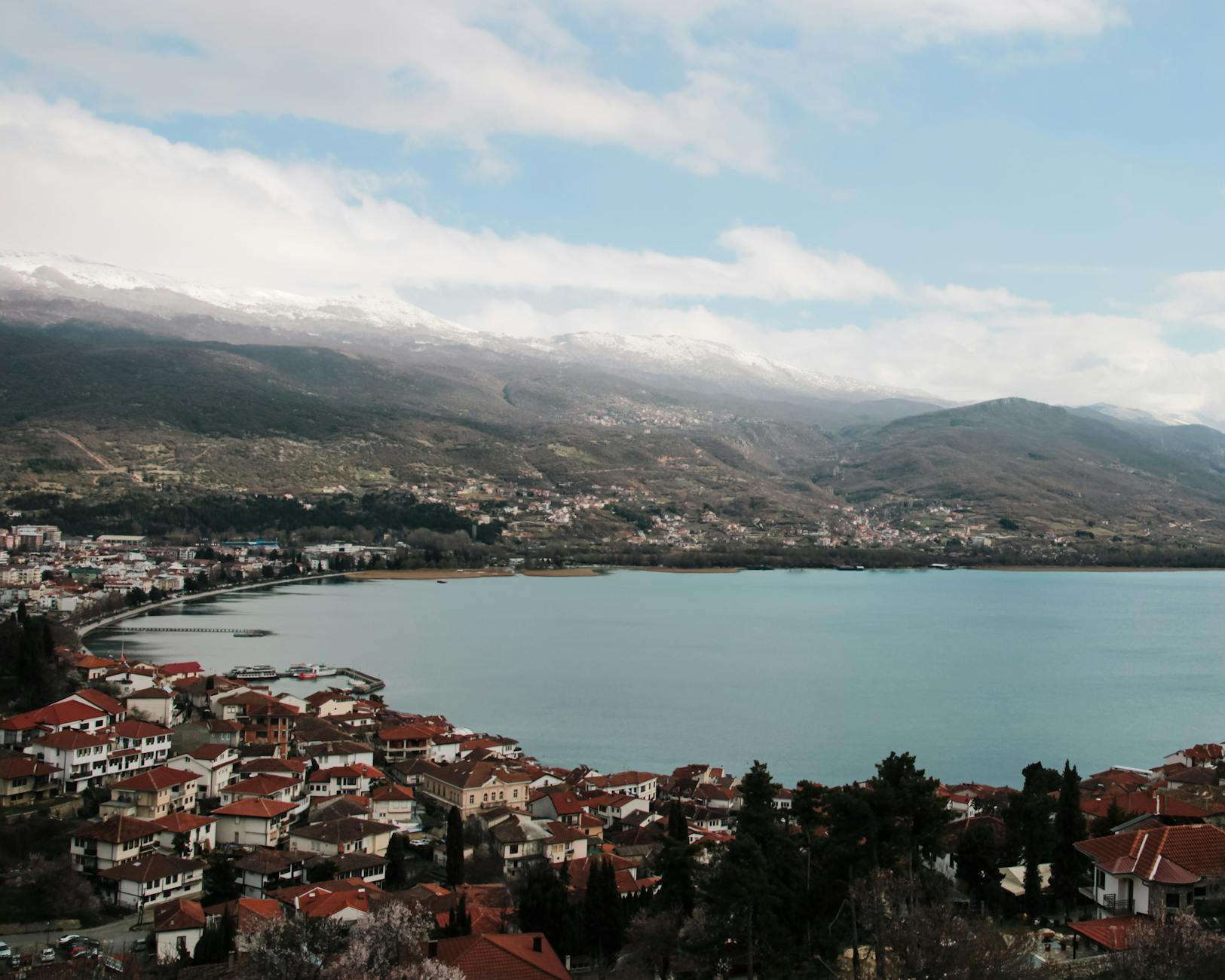
North Macedonia has one of the densest concentrations of cultural heritage per square kilometre in the Balkans. The country sits at the centre of several major historical civilisations — Macedonian, Roman, Byzantine, Ottoman — and its museums and archaeological sites cover this depth. From the icon collection in Ohrid (one of the finest in the world outside Thessaloniki) to the Neolithic astronomical site at Kokino, the cultural offer is substantial and largely non-touristed.
Museums in Skopje
Museum of Macedonia (Muzej na Makedonija)
The main national museum, housed in three interconnected buildings in the Old Bazaar (Čaršija): the archaeology building, the ethnology building, and the history building. Together they present the most comprehensive overview of Macedonian history and material culture in the country.
Archaeology wing: Covers prehistoric settlements, the ancient Macedonian culture (different from the Greek Macedonian kingdom), Paeonian and Dardanian cultures, Roman period, and Byzantine material. The Roman collection is substantial — Macedonia was traversed by the Via Egnatia, one of the most important roads in the ancient world.
Ethnology wing: Traditional Macedonian dress, crafts, household objects, and tools. The textiles are exceptional — regional differences in embroidery patterns, weaving techniques, and costume are carefully documented. Traditional Macedonian dress varies significantly between the Ohrid, Bitola, Skopje, and eastern regions.
History wing: Ottoman period, national revival, Ilinden Uprising of 1903, the Balkan Wars, World War periods, and Yugoslav Macedonia.
Location: Čaršija (Old Bazaar), near the Stone Bridge.
Hours: Tuesday–Sunday 09:00–17:00.
Entry: 100 MKD (~€1.60).
Time needed: 2–3 hours.
Holocaust Memorial Centre for the Jews of Macedonia
One of the most important Holocaust memorial institutions in the former Yugoslavia. Between March and May 1943, the Nazi-aligned Bulgarian administration (which occupied Macedonia during the war) rounded up and deported all 7,148 Jews from Macedonia to the Treblinka extermination camp. None survived.
The Memorial Centre, opened in 2011, documents this history with personal testimony, deportation documents, family photographs, and the names of every victim. It is housed in a purpose-built building in the Old Bazaar. The presentation is quiet, careful, and comprehensive. It takes about an hour and leaves a lasting impression.
Location: Ploštad Makedonija 2 (Old Bazaar area).
Hours: Monday–Friday 09:00–17:00, Saturday 09:00–13:00.
Entry: Free.
Time needed: 1 hour.
Skopje Fortress (Kale)
A hilltop fortress overlooking the city, with construction from Byzantine through Ottoman periods. The walls are largely intact; the interior has been excavated to reveal layers of construction. The views over the city — the river, the Old Bazaar, the new city — are the best available. Limited indoor exhibition but the architecture and archaeology are the point.
Location: Immediately above the Old Bazaar.
Hours: Daily 09:00–20:00 (summer), 09:00–17:00 (winter).
Entry: 120 MKD (~€2).
Museum of the City of Skopje
Housed in the old railway station building, which was badly damaged in the 1963 earthquake. The museum clock, stopped at 05:17 — the moment of the earthquake — is preserved on the building's facade as a memorial. Inside: the history of Skopje from prehistoric times to the present, with particular attention to the 1963 earthquake that killed over 1,000 people and was rebuilt with international aid.
Location: Marshal Tito Street, near the central station.
Hours: Tuesday–Sunday 09:00–17:00.
Entry: 50 MKD (~€0.80).
Ohrid: The Icon Collection
National Museum of Ohrid — Icon Collection
The most internationally significant art collection in North Macedonia. The Icon Collection in Ohrid's Samuil's Fortress holds over 800 Byzantine and post-Byzantine icons dating from the 11th to the 19th century. The Ohrid icons are considered, with those in Thessaloniki and Constantinople, among the finest surviving examples of Byzantine panel painting.
The most important piece is the icon of the Holy Mother of God Peribleptos (12th century) — a work of extraordinary tenderness and technical mastery. The collection as a whole represents a 700-year unbroken tradition of icon painting, with examples from every major period of Byzantine art.
Location: Within Samuil's Fortress, above Ohrid Old Town.
Hours: Tuesday–Sunday 09:00–17:00.
Entry: 100 MKD (~€1.60).
Time needed: 1.5 hours.
Church of St. Sophia, Ohrid
Not a museum in the strict sense, but a functioning church containing frescoes from the 11th century — among the oldest surviving Byzantine frescoes in the Balkans outside Istanbul. The apse fresco of the Ascension with the Virgin Orant is the centrepiece. The narthex has a complete programme of mid-Byzantine frescoes in remarkable condition.
Hours: Daily 09:00–18:00.
Entry: 100 MKD (~€1.60).
Classical Amphitheatre of Ohrid
A Hellenistic theatre (3rd–2nd century BC) preserved in the hillside below the fortress. Excavated and partly restored, with the original stone seating visible. Used for the Ohrid Summer Festival performances each year. Free to view from outside; ticketed for events.
Beyond Skopje and Ohrid
Kokino Megalithic Observatory (UNESCO Tentative List)
A Neolithic astronomical site on a hilltop near the Serbian border, used between 1800 and 1500 BC as an observatory for marking solar and lunar events. Stone markers were positioned to observe sunrise and moonrise at the solstices and equinoxes. NASA listed it among the oldest astronomical sites in the world. There is a small visitor centre; the site itself is a natural rocky plateau with carved stone markers.
Location: 30 km north of Kumanovo. A rental car is the only practical way to reach it.
Hours: Daily 09:00–18:00 (summer).
Entry: 100 MKD (~€1.60).
Time needed: 1.5 hours including drive from main road.
Stobi Archaeological Site
A significant Roman city on the confluence of the Vardar and Crna rivers, active from the 1st century BC to the 6th century AD. The excavations cover a large area with clearly visible street layout, mosaics, a theatre (one of the best preserved in the Balkans), Roman villas, and a 4th-century Christian basilica. The on-site museum holds statues, coins, glass, and household objects.
Location: Near Gradsko, 80 km south of Skopje on the E75 (on the route to Thessaloniki or Gevgelija).
Hours: Daily 09:00–19:00 (summer), 09:00–15:00 (winter).
Entry: 100 MKD (~€1.60).
Time needed: 2 hours.
A Macedonian city founded by Philip II in the 4th century BC, later a major Roman city. The site holds the finest Roman mosaics in North Macedonia — polychrome floor mosaics from the late Roman and early Byzantine periods, depicting birds, fish, hunting scenes, and geometric patterns. Also: a small theatre, Roman baths, and early Christian basilicas.
Location: 1 km from Bitola city centre. 180 km from Skopje (2 hours).
Hours: Daily 08:00–20:00 (summer).
Entry: Free.
Time needed: 1.5 hours.
Practical Notes
- Combined visits: Skopje Fortress + Museum of Macedonia + Holocaust Memorial can all be done in a morning without a car — all in the Old Bazaar area.
- Ohrid: Requires at minimum a half-day; a full day is better. Allow time for the lakeside walk between the Icon Collection and Church of St. Sophia.
- Kokino and Stobi: Both require a rental car. Stobi can be combined with a Thessaloniki day trip as it sits on the E75 south.
- Heraclea Lyncestis: Worth combining with a drive to Bitola and Pelister National Park.
To explore North Macedonia's museums and archaeological sites at your own pace, rent a car at Skopje Airport.
Quick reference
| Item | Detail |
|---|---|
| Company | Relax Rent a Car Skopje Airport (since 2001) |
| Pickup location | Skopje Alexander the Great Airport (SKP / LWSK) |
| Hours | 24/7, all flights |
| Payment | Cash (EUR/MKD), Visa, Mastercard |
| Deposit | €100 refundable at pickup (cash or card, no card hold) |
| Insurance | Third-party liability included; CDW €7/day optional (€200 excess); Full cover €15/day zero excess |
| VAT | 18% included in all prices |
| Phone / WhatsApp | +389 71 390 627 |
Frequently Asked Questions
What is the best museum in North Macedonia? The Museum of Ohrid is the country's most important cultural collection. It holds Byzantine icons, Roman glass, and the famous Ohrid Gold — a 2nd-century BC gold wreath and jewellery set from a Hellenistic-period tomb. Ohrid itself, as a UNESCO site with 365 churches, is the best destination for cultural tourism in North Macedonia.
Is the Holocaust Memorial Center in Skopje worth visiting? Yes — the Holocaust Memorial Center for the Jews of Macedonia in Skopje is an important and carefully curated museum documenting the deportation and murder of 7,148 Macedonian Jews in March 1943. The collection includes personal testimonies, photographs, transport documents, and pre-war community life artefacts. The museum is modern and well-designed with full English labelling.
How do I get to Stobi archaeological site from Skopje? Stobi is located approximately 80 km south of Skopje near the town of Gradsko, adjacent to the A1 motorway. The drive from Skopje takes about 1 hour. The site is signposted from the motorway. There is an on-site museum and the ruins include a 2nd-century theatre, Roman houses with original mosaics, early Christian basilicas, and the episcopal palace.
What is the Museum of the Macedonian Struggle? The Museum of the Macedonian Struggle in Skopje depicts the struggle for Macedonian independence from Ottoman, Bulgarian, and Serbian rule from the late 19th century through the formation of Yugoslavia. It uses high-quality wax figures, original weaponry, and documents to recreate historical events. It is located near the Stone Bridge in the city centre.
What is the entry fee for museums in North Macedonia? Museum admission in North Macedonia is very affordable. The Holocaust Memorial Center costs 100 MKD (approximately €1.60). Stobi archaeological site is 120 MKD (€2). The Museum of the Macedonian Struggle is 100 MKD. The Ohrid Museum and most Ohrid church treasuries charge 100–200 MKD per site. A full cultural day in Ohrid would cost €8–12 total.