
Planning to Skopje Stone Bridge walking tour? This guide covers everything you need: real prices, hidden fees to avoid, and what makes skopje stone bridge vardar walk a smart choice.
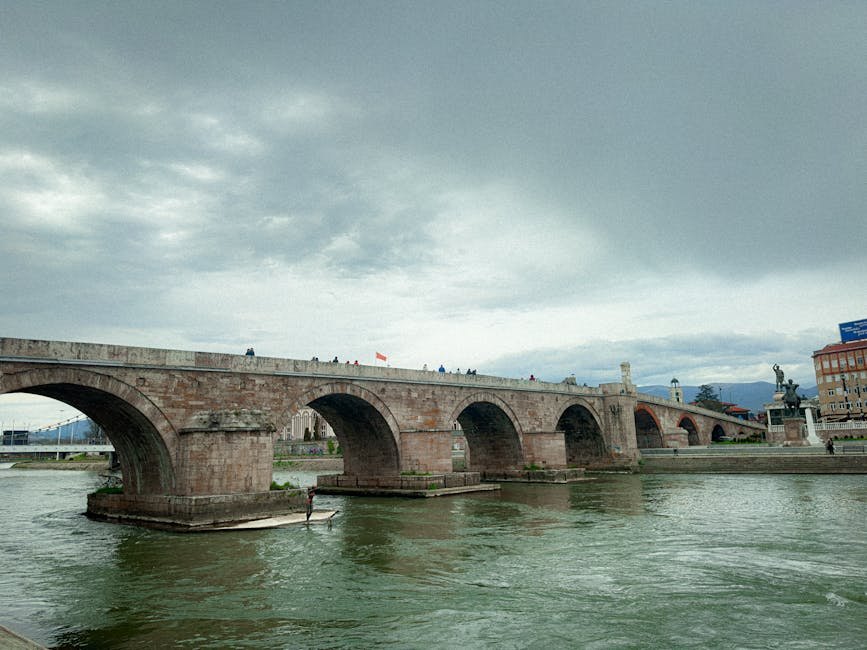
The Stone Bridge is the heart of Skopje. Built in the 15th century by Ottoman engineers, restored after every major earthquake (most recently 1963), and now flanked on both sides by the controversial Skopje 2014 architectural project, it has been the symbolic crossing between the city's two halves — the Ottoman north bank and the European-facing south bank — for 600 years.
This self-guided walking tour follows the river from the Old Bazaar to the modern centre and back, covering the Stone Bridge, three contemporary museums, the Ottoman quarter, and the city's best photographic vantage points. The full circuit takes 2–3 hours at an unhurried pace.
Starting Point: Old Bazaar (Stara Čaršija) — Skopje Stone Bridge Walking Tour
Start at the Sebilj fountain in the heart of the Old Bazaar. This Ottoman-era water fountain is the customary meeting point of Skopje's Albanian-Turkish-Roma quarter, and the surrounding lanes haven't fundamentally changed in 500 years.
Walk south on Beit Pasha Street (the main bazaar lane) towards the river. You'll pass the Murat Pasha Mosque (1436), the Suli Han (an Ottoman caravanserai now an arts centre), and dozens of small workshops selling silver, leather, and traditional foods. Allow 30–45 minutes to browse.
For a deeper look at the bazaar, see the Skopje Old Bazaar guide.
Crossing the Stone Bridge
The bridge spans 214 metres with 12 stone arches. The current structure is largely Ottoman work from 1451–1469 under the orders of Sultan Mehmed II, though parts of the foundation are believed to be Roman.
The bridge was the only way across the Vardar for most of the city's history; today it's pedestrian-only. Stop in the middle for the views — north up the river to Mount Vodno, south to the Macedonia Square, and east towards the Old Railway Station tower (frozen at 5:17 to mark the moment of the 1963 earthquake).
The bridge is best photographed from the riverbank — both upstream and downstream — rather than from on top of it.
South of the River: Macedonia Square and Skopje 2014
Step off the bridge into Macedonia Square — the main civic square of the city, redeveloped in 2014 as part of a controversial architectural project to give Skopje a more "neoclassical" appearance.
What you see now: marble buildings, dozens of bronze statues of historical figures, and the Warriors on Horseback monument (a 22-metre statue of Alexander the Great, never officially named). The project was politically divisive; for a fuller treatment, see the Skopje 2014 architecture guide.
Walk west along the Vardar river south bank. You'll pass:
- Holocaust Memorial Centre for the Jews of Macedonia — small, sobering, free entry. Worth 30 minutes.
- Mother Teresa Memorial House — the Skopje-born saint's birthplace area (the original house is gone) commemorated with a small museum. Free entry.
- Macedonia Archaeological Museum — across the river, visible from the south bank with its prominent neoclassical façade
For a focused museum visit, see the Museum of Macedonia Skopje and North Macedonia museums guide.
The Two Riverbanks: A Photo Walk
The Vardar river embankment is one of the most pleasant urban walks in the southern Balkans. Stone-paved on both banks, with cafés on the south side and the old Ottoman quarter rising to the north.
Recommended photo stops
- Stone Bridge from the upstream eastern bank — the classic shot, with the Old Bazaar minarets behind
- Skopje Fortress (Kale) from the south bank — at sunset, the fortress walls glow
- Eye of London Bridge — the modern pedestrian bridge 200 m east of the Stone Bridge, lined with bronze statues
- Art Bridge — the second new pedestrian bridge, lined with statues of poets and musicians
The two new pedestrian bridges (part of the Skopje 2014 project) are lined with bronze statues of historical Macedonians — a controversial but undeniably photogenic feature.
Café stops
The south bank between the Stone Bridge and the Eye of London Bridge has terrace cafés along the water. A coffee here is one of the city's small pleasures — see the Skopje coffee and cafe culture guide.
Skopje Fortress (Kale)
A 15-minute walk uphill from the Stone Bridge brings you to Skopje Fortress (Kale) — a 6th-century Byzantine citadel rebuilt by the Ottomans in the 15th century. The walls offer the city's best panoramic view: the Vardar valley, the Skopje 2014 buildings, the Old Bazaar minarets, and Mount Vodno rising to the south.
Free entry. Allow 30 minutes for the walk up and the panoramic walk along the walls. The fortress courtyard occasionally hosts summer concerts.
Walking Route Summary
A logical loop covering the highlights in 2–3 hours:
- Sebilj fountain in the Old Bazaar (start)
- South down Beit Pasha Street through the bazaar
- Across the Stone Bridge to Macedonia Square
- Macedonia Archaeological Museum (exterior view) and Warrior on Horseback
- West along the south bank embankment
- Cross the Eye of London Bridge back to the north bank
- Up to Skopje Fortress for the panoramic view
- Down through the Old Bazaar to the Daut Pasha Hammam (now an art gallery)
- Coffee at one of the café-restaurants on the bazaar's eastern lanes
- End at the Sebilj fountain
The route is 3.5 km total, all on flat terrain except the fortress climb (10 minutes uphill).
When to Go
Spring (April–May) and autumn (September–October) are ideal — pleasant temperatures, fewer crowds, river running full from snowmelt or autumn rain.
Summer evenings (after 7 PM) work well — the bazaar empties out, the temperature drops, and the cafés along the river fill with locals.
Winter is quieter but the embankment cafés have outdoor heaters, and the Christmas market on Macedonia Square (December) is genuinely charming.
For seasonal context, see autumn in North Macedonia travel guide and spring travel Macedonia.
Where to Park
If you're driving in from outside Skopje, park at the Ramstore parking (south bank, 5 minutes from Macedonia Square) or the City Park parking (north of the centre). On-street parking in the immediate centre is heavily restricted — see the parking in Skopje guide for the full breakdown.
Distances from Skopje by car
| Destination | Distance | Drive time | Road type |
|---|---|---|---|
| Skopje Airport (SKP) | 21 km | 25 min | A1 motorway |
| Matka Canyon | 17 km | 25 min | Paved single-carriageway |
| Ohrid | 173 km | 2h 30 min | A2 motorway |
| Bitola | 169 km | 2h 15 min | A2 + R-roads |
| Tetovo | 41 km | 35 min | A1 motorway |
| Kosovo border (Blace) | 23 km | 25 min | A1 motorway |
| Pristina | 92 km | 1h 30 min | A1 + R-roads |
Frequently Asked Questions
How long does the Stone Bridge walking tour take? Allow 2–3 hours for the full loop including the Old Bazaar, Stone Bridge crossing, Macedonia Square, the river embankment, and Skopje Fortress. A quicker version covering just the bridge and one side can be done in under an hour.
Is the Stone Bridge actually old? Yes — the current bridge is largely Ottoman work from 1451–1469 under Sultan Mehmed II. The foundation stones may be Roman in origin. The bridge has survived multiple major earthquakes including the catastrophic 1963 event, restored each time but retaining most of its original masonry.
Is the walking route safe at night? Yes — central Skopje is safe to walk at night, including the Stone Bridge, river embankment, and Macedonia Square. The Old Bazaar empties after 9 PM but remains generally safe; standard urban awareness applies.
Do I need a guide for this walk? No — the route is self-explanatory and well-signposted in English. Free walking tours operate from Macedonia Square most days at 10 AM and 6 PM if you'd prefer commentary.
Can I do this walk in the rain? Yes, but the riverbank embankments become slippery. The Old Bazaar's narrow lanes have some shelter from the surrounding buildings. The fortress climb is best skipped in heavy rain — the path is exposed. Relax Rent a Car Skopje Airport has operated since 2001 from Alexander the Great Airport (SKP), serving travellers across North Macedonia and the Western Balkans.